"Only God can give hope… And I need it to raise my granddaughter and to live to see our victory."

The story of a Kharkiv family who, despite the war, daily shelling and air raid alarms, find the strength not to fall into despair and to cherish dreams of a joyful, peaceful future.
“He was shooting from around the corner, and people were waiting for bread...”
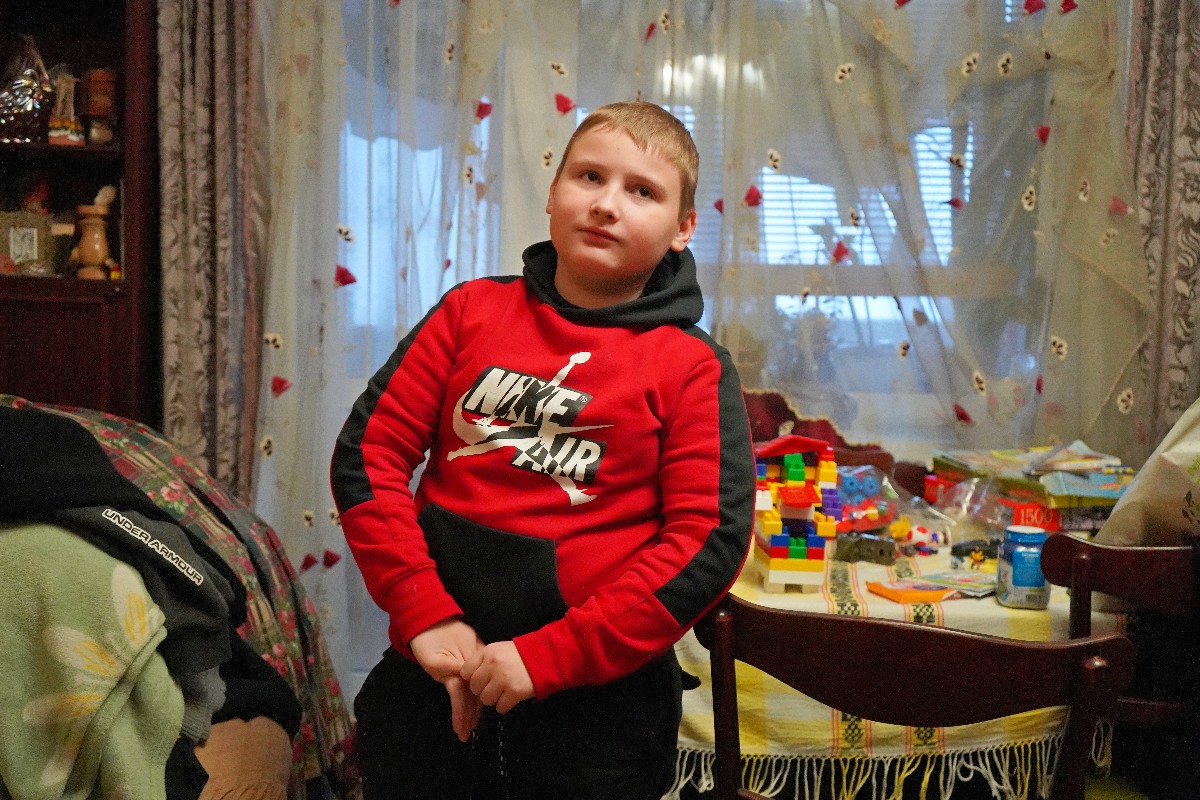
“Artemko will come out now and show you the way,” says Ms. Tetyana on the phone. We wait downstairs at the door of a high-rise building in one of Kharkiv's residential areas. In a minute, we all take the elevator up to the 9th floor. “Were you at school today?” we ask our little guide. “Yes, for two lessons. The rest are online,” Artem replies. “Do you take the subway to school?” “Yes. Twice a week. And three days a week I study from home”.
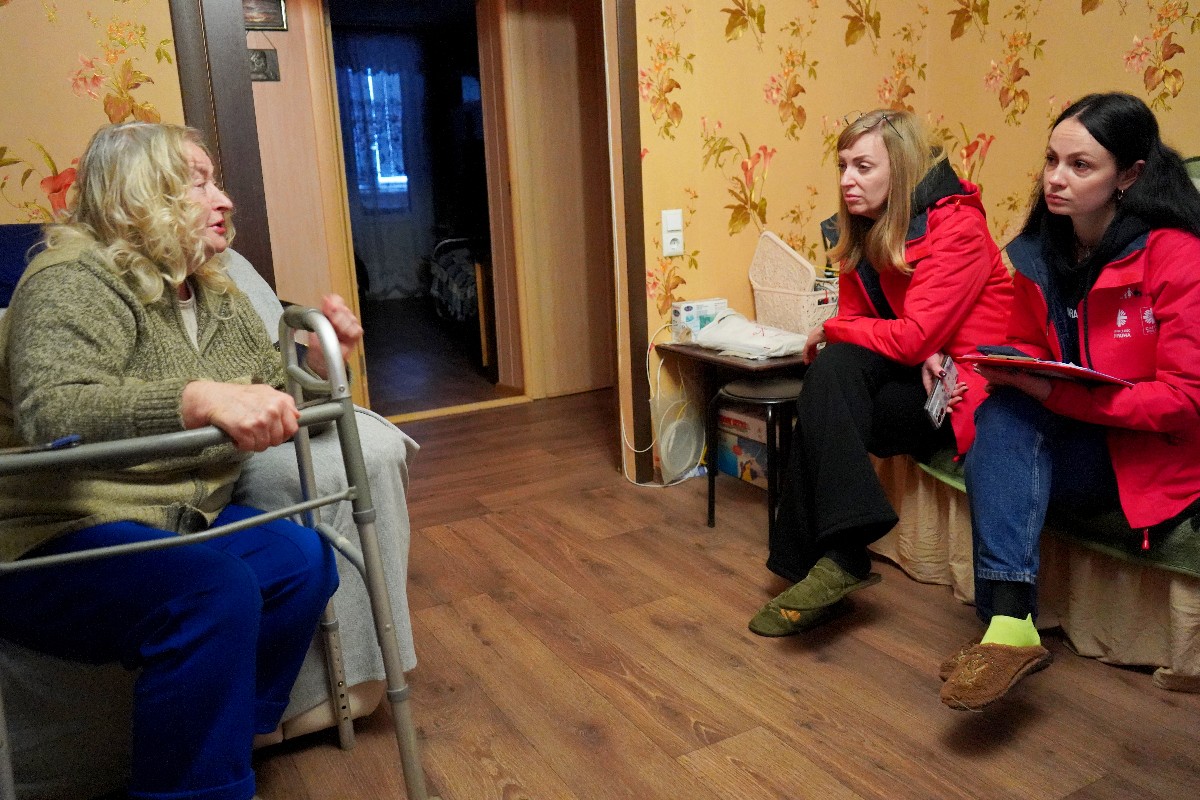
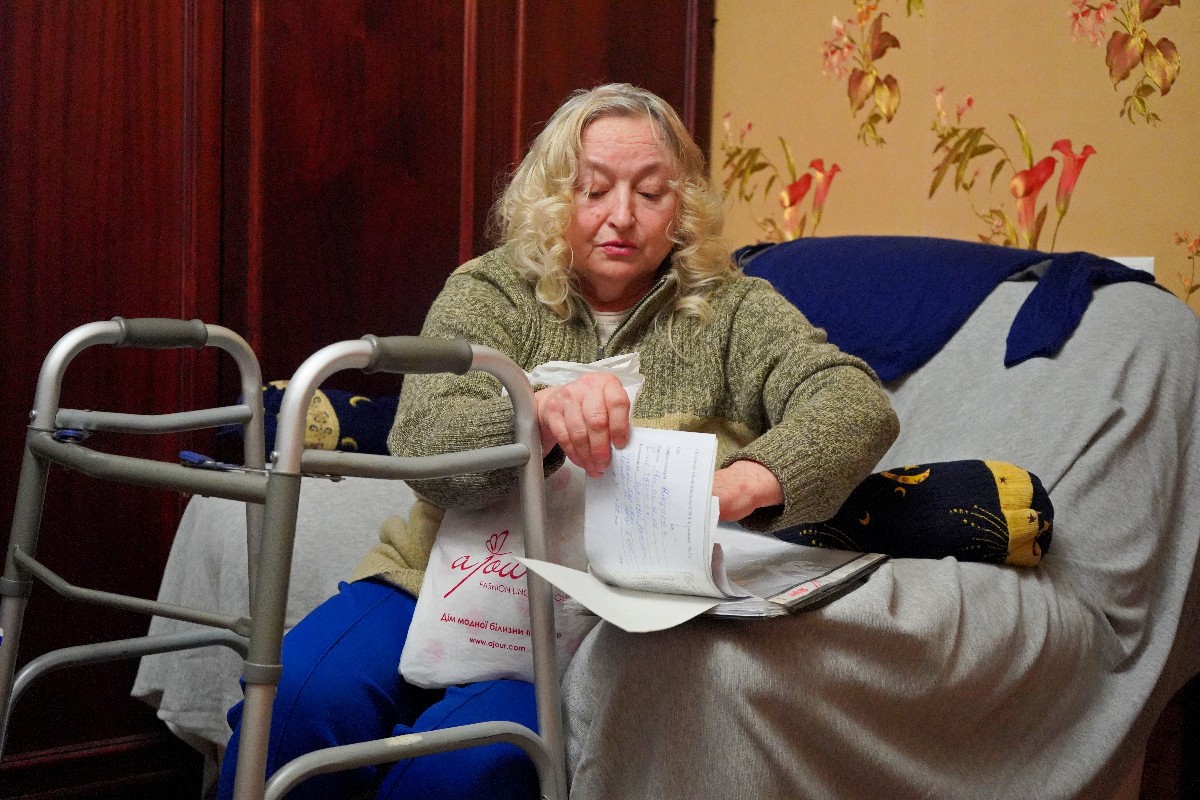
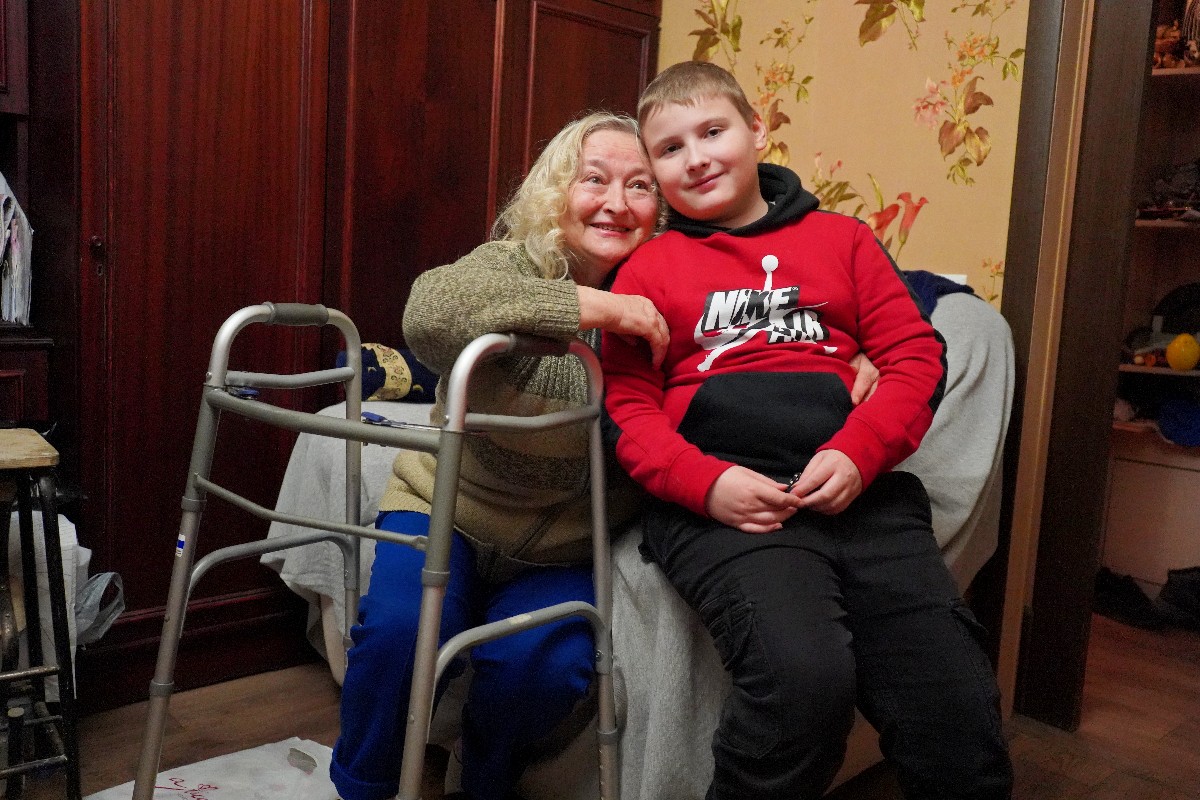
A smiling, friendly woman opens the door and invites us into her home. She has a beautiful hairstyle and light makeup. “I was getting ready because I was expecting guests. But I didn't quite make it in time,” she laughs, removing a thin curler that has somehow gotten “lost” in her hair. The cramped two-room apartment is cool. The light is dim and subdued. Ms. Tetyana moves around with the help of folding universal crutches. She can hardly walk on her own.
Tetyana Anatoliivna is 71 years old. She has lived in Kharkiv since birth. She has two sons. Eight-year-old Artemko is her younger son's child. Before the war, he lived with his parents in Balakliya.
“When the war started, Kharkiv was heavily bombed. It was very scary – the hail was flying. Once, I counted 24 shells,” Ms. Tetyana recalls the events of February 2022. "They were flying one after another, with fiery tails... It was a terrifying and unusual sight. I watched, spellbound... I knew it was dangerous, but I couldn't tear myself away from the window. The next day, a bomber flew in. It was flying so low that you could see the inscriptions on its wings. It dropped a bomb three streets away from our house. It bombed the school there and destroyed houses. The shock wave threw me so hard that I ended up under the sofa. I was literally “packed” into a narrow gap between the floor and the sofa. I would never have been able to get in there on my own.
And then the occupation began... Russian tanks were already parked outside our windows. I saw with my own eyes how one of the occupiers, dressed in civilian clothes, was waving his arms at the intersection. I was waiting downstairs, near the building, because the elevator wasn't working and I couldn't get home. People were standing in line for bread. I saw the Russian occupier approach a car, take out an automatic weapon, and fire three rounds from around the corner toward the road. So that no one would see him. He was intimidating people. But the people who were standing in line for bread continued to stand there... They didn't disperse. When they talk about the war in 1941, how people stood for hours for bread, it was the same for us. And there was no bread... He was shooting, a tank was rushing by, and people were waiting for bread. It was horrific. That image is still before my eyes..."
“I became disabled at work. My husband took care of me”
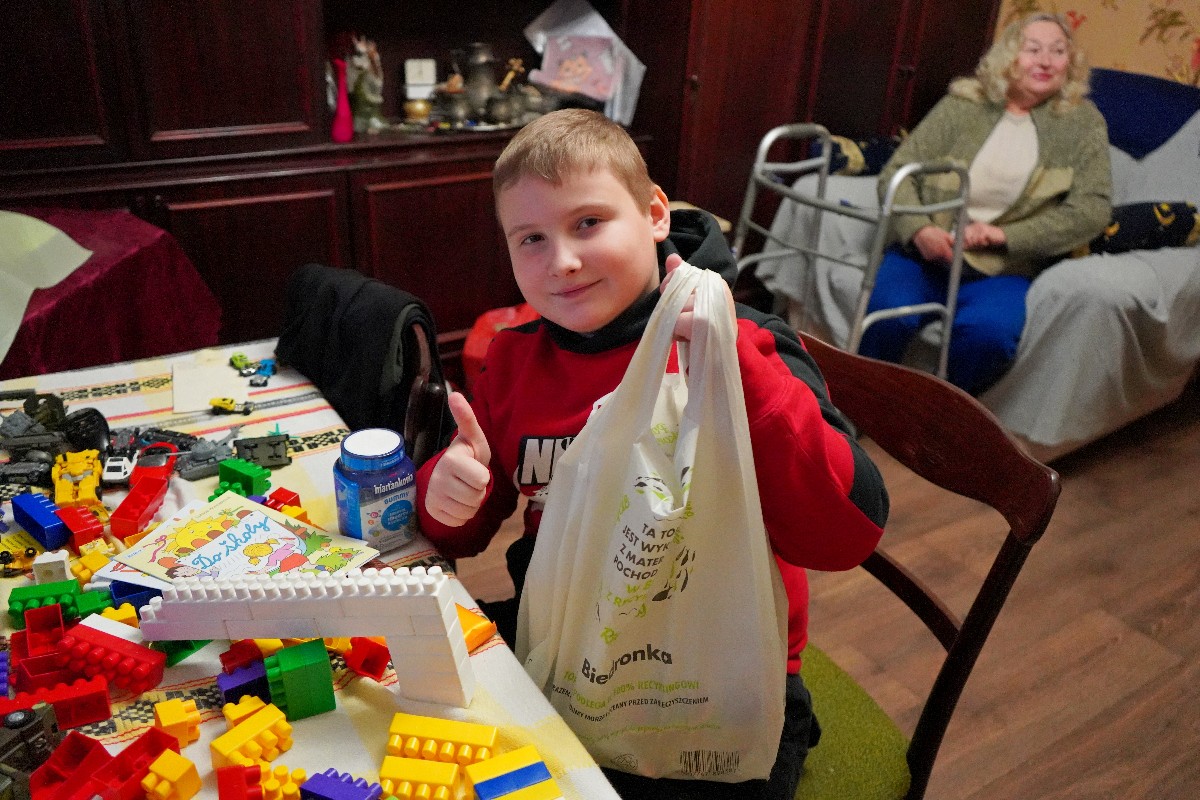
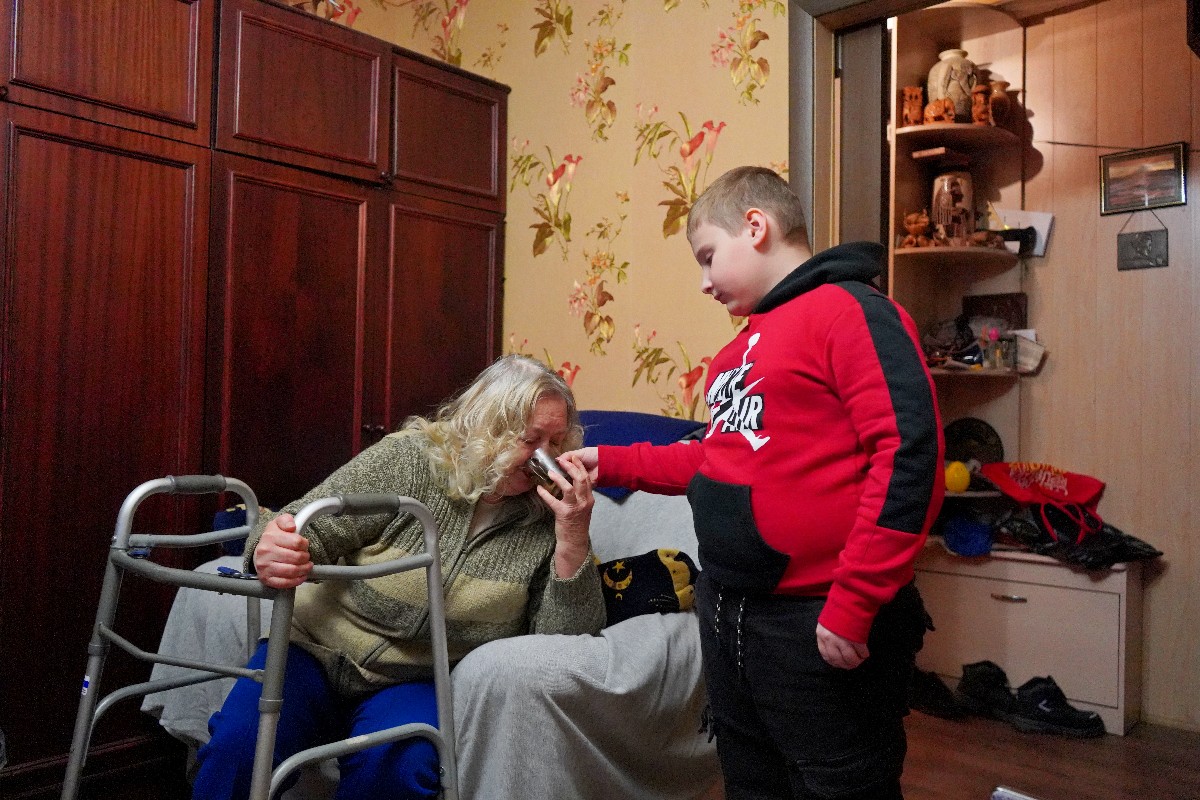
We talk in the living room. Artemko is playing with his building blocks and doesn't listen to our conversation. But when his grandmother gets upset, he asks how he can help her. He brings her a glass of water. It is still very difficult for Ms. Tetyana to recall the events of those days.
"... No one knew what to do, where to run. I called my sons: take the children away. But Balakliya had already been occupied. The occupiers took my son to the basement. How he escaped from there, how they left – I don't know... They don't tell me so as not to traumatize me,“ the woman sighs. ”They came to Kharkiv to pick me up. I said I wouldn't go anywhere because I couldn't walk, I felt bad, I couldn't get to the car. They went with the children to western Ukraine and stayed there for a while. I don't know what happened to their family after that, whether they quarreled or divorced... But a year ago, they brought Artem to me – he was so small and thin... He didn't go to school; for some reason, they didn't send him to first grade. And my son, Artem's father, was mobilized. They just stopped him on the road when he was taking the child to Kharkiv. It's a difficult story, complicated, I don't understand much... In short, now we live here together. Artem is my greatest helper, comfort, and support."
Tetyana Anatoliivna worked for many years at the Hartron factory as a technical systems engineer. "Now we can talk about it, but back then the company was closed. No one knew what each department did. Everything was classified. Something related to space production. Did I like my job? That wasn't a question back then. In the 1970s, there was only one word: must. That's how we were raised. My father was very strict. He came back from the war with his nerves shot. He would beat his children with a soldier's belt for disobedience. It's scary to remember. He was a staunch Stalinist. But God sent me a good husband... We were soul mates. When I fell at work and seriously injured my leg, I continued to go to work because they wouldn't give me sick leave and refused to recognize the injury as work-related. And so it went until I became disabled. I was paralyzed, bedridden for five years, unable to get up. My husband nursed me... He was with me all the time. At the end of December 2014, he finally took me home from intensive care. In the evening, just before New Year's Eve, he went out to buy bread and said he would warm up the car at the same time. He went out. He sat down by the car, and that was it. Sudden death. One second, and he was gone. For me, it was such a trauma that I still haven't gotten over it..."
“May each of our ‘thank yous’ give strength to Polish benefactors. They are people with big hearts”
Ms. Tetiana calls the support she received from the Ukrainian-Polish project “Family to Family” something “truly incredible that happened to her during the entire war.” She filled out the application form but did not fully believe that she would receive a positive response. “Because there are so many people in need right now...” When she received a message from the Kharkiv branch of Caritas-Spes Ukraine that she and her grandson had been accepted into the project, she cried with joy. She couldn't calm down for a long time. “I rarely cry, but this just moved me so much...”
With the money she received from the project, the woman bought winter boots for herself and Artem. “They're over there, in the hallway.” She also bought warm clothes. She paid her utility bills, especially for electricity, so that “the lights wouldn't be turned off.” She wanted to pay off her debt as quickly as possible because when it's cold in winter, you can't do without a heater. She bought medicine for her grandson and some for herself. Her grandson is currently undergoing examination at Okhmatdyt and has been referred for treatment by a psychiatrist. “The child has a nervous tic. He was so frightened after the shelling that he stopped talking,” the woman explains. "He sat under a blanket in the cellar for three days. He can't forget it. Doctors examined him, and a speech therapist worked with him. The psychiatrist wrote a prescription for medication, but when I saw how much it cost, I was scared. I dropped the subject. It's too expensive for us. Artemchik, show us the postcard that helps us!"
The boy brings a small card with the Lord's Prayer written on it.
“A man at Caritas gave it to him,” explains my interlocutor. "He told Artemchik: when you feel very scared or sad, take this card and read it. I didn't know about it; they talked about it together. One night, when it was very noisy and scary, my grandson said, 'Grandma, where's my card? Four months had passed, and he remembered it... We turned on the light, and I read the prayer once, then twice. Then I said, 'Now you read it. You know... I don't go to church very often, but I believe that there is a great power above us, that Jesus helps and protects us. This card with a prayer for Toma is his talisman. He reads it and is not afraid.
When drones or rockets fly overhead, the chandeliers in our apartment shake. I open the windows so that the shock wave doesn't hit us. Once, an ambulance came to me and asked, “How can you live here when your house is shaking from the explosions?” “I'm used to it,” I said. It's scary to get used to this, I know...
Five days ago, it was very scary. There was explosion after explosion. I went out into the hallway and stood there, ready for anything. At times like that, you don't think about money, documents, or clothes. You don't need anything. You just want to get out of this hell alive. Then a reconnaissance drone was flying, and it was shot down near the house. It's like a movie here. Go outside, look up, and you'll see everything: drones being shot down, bullets flying – red and white...
When Artem and I were at Caritas-Spes, I wanted to go into the church. But I didn't ask if I could take my walker with me. I want to go there with Tyoma. Definitely... Because only God can give hope. And I need hope to raise and educate Artem. As long as I have the strength, I will give it to him. Please convey our heartfelt gratitude to the Polish benefactors for their support, for their sensitive souls and kind hearts. For their openness. May our hope also support them in difficult times. And each of our “thank yous” gives them strength.
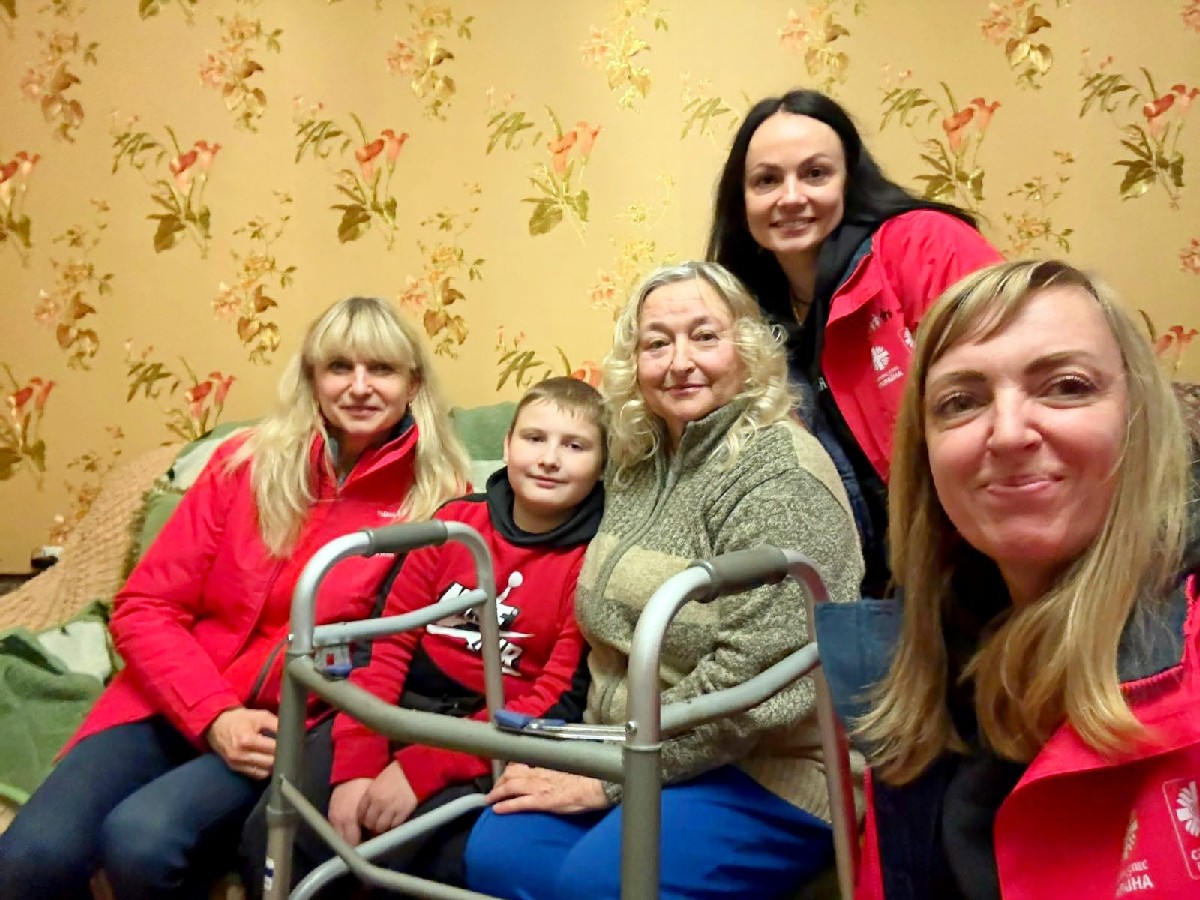
... We take a group photo as we say goodbye. We talk about dreams. “My dream?” sighs Ms. Tetyana. "The sea... I dream so much of going to the warm sea. Or to a sanatorium. So that at least for a while I don't have to stand in the kitchen, cook, but go for massages. The doctors told me: we don't know how you walk. It's impossible to get back on your feet after such paralysis. But it happens, as you can see. I have someone to walk for. And someone to live for.
What bothers me? Most of all, the war... And the fact that there are almost no people. You see... I'm not one of those people who loves to socialize or talk a lot. But when you live as if in a desert. You go outside, and there are no people to be seen. It's scary."
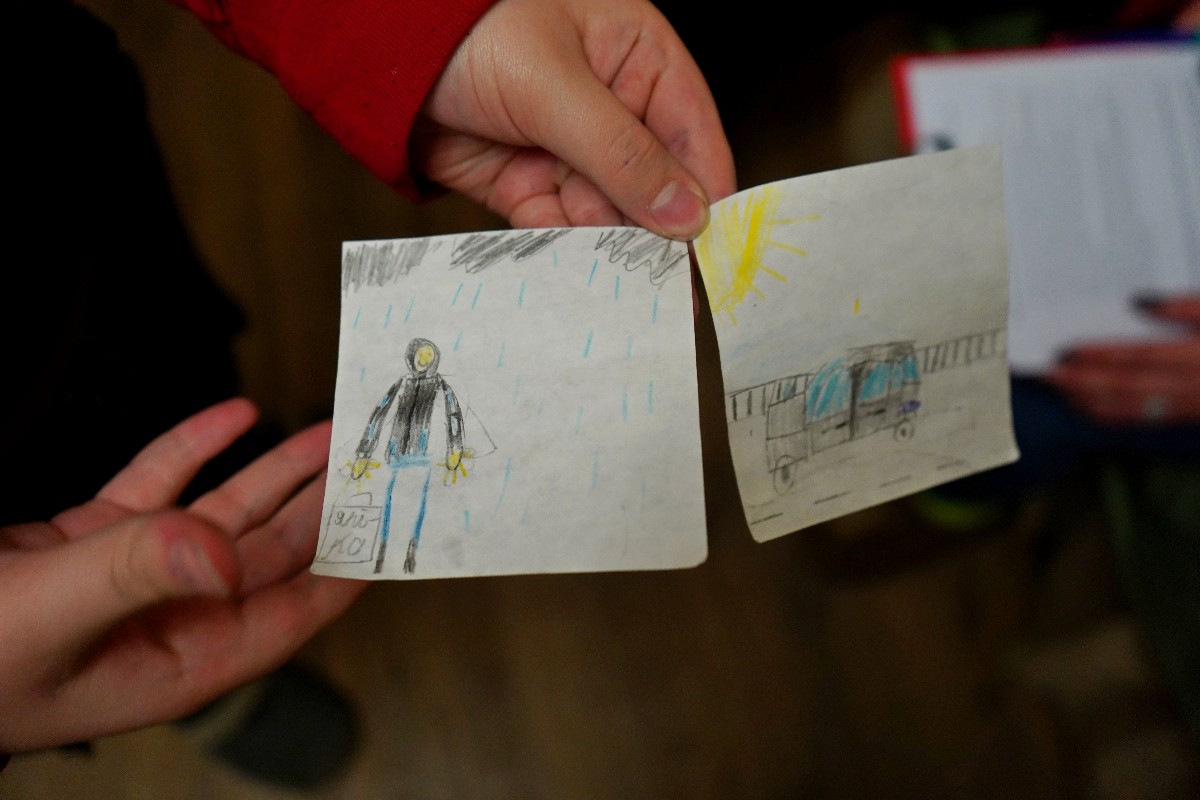
Artemko admits that he loves to draw. He shows the drawings he has prepared for his dad. He is waiting for him to come back from the war so he can give them to him. And when he grows up a little and gets even better at drawing, he will draw a portrait of his grandmother. He wants her to be smiling and beautiful in it. Just like she is today.
The “Family to Family” project is implemented by Caritas-Spes Ukraine with financial support from Caritas Polska in the Kharkiv-Zaporizhia Diocese and the Lviv Archdiocese. The project provides assistance to Ukrainians who find themselves in difficult circumstances as a result of the war: it offers cash support and grants to help them develop their own businesses.
We are sincerely grateful to our partners at Caritas Polska for their support of this important project, for their dedication to a good cause, their openness, and their compassion!