“When an enemy drone is flying above you and you don't know if you'll make it to the next tree...”
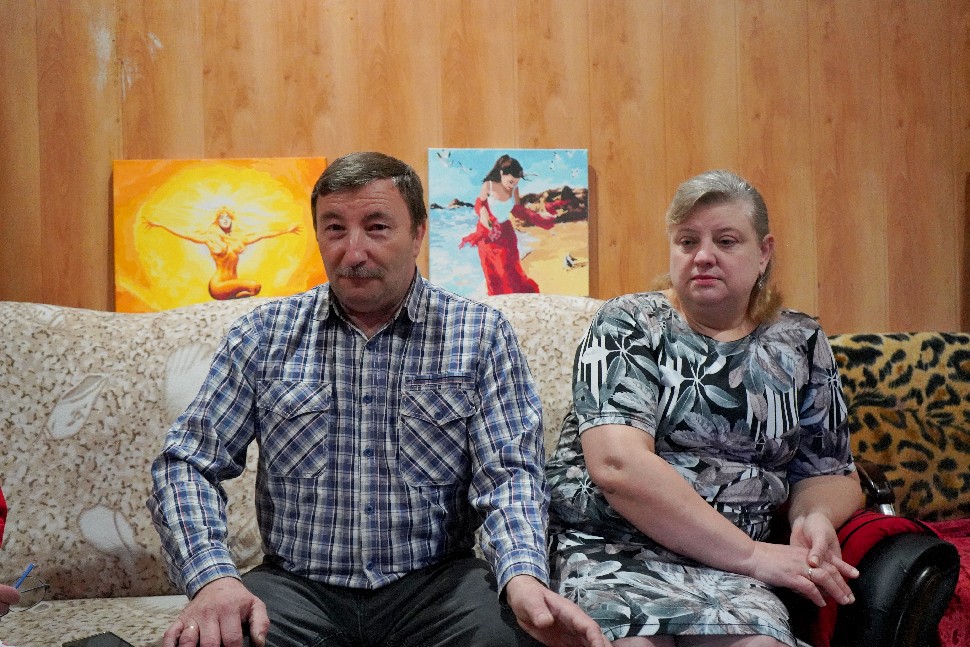
Participants in the “Family to Family” project, a married couple of internally displaced persons from Donetsk region talk about life near the combat zone, bitter losses and hope, dreams and human compassion, which keeps the world going
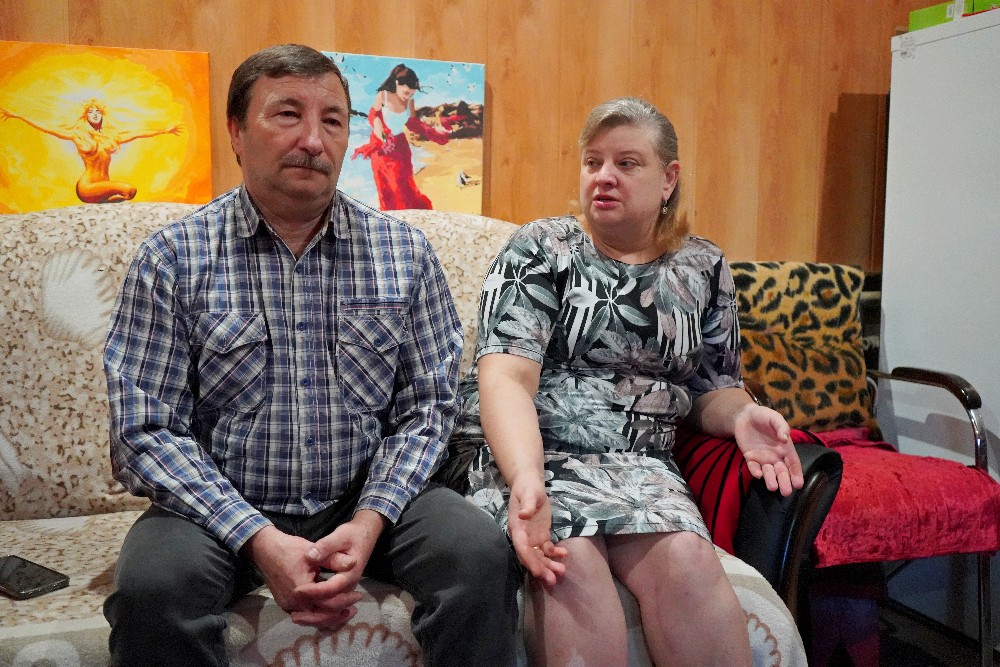
“People here are kind, sensitive, they understand us and try to support us as best they can. And it's relatively calm in Kharkiv compared to what we had at home, especially last year. But we still want to go home. That's our biggest dream – to see our home again, to return,” say Olena and Valentyn Kamenetskyi.
The couple was forced to leave their hometown of Kostyantynivka in Donetsk region in early July this year. They did not want to leave their home until the very last moment. They had been building it with their own hands since 1998, tending to their garden, cultivating their vegetable patch... They had their own world. But that world was destroyed by war.
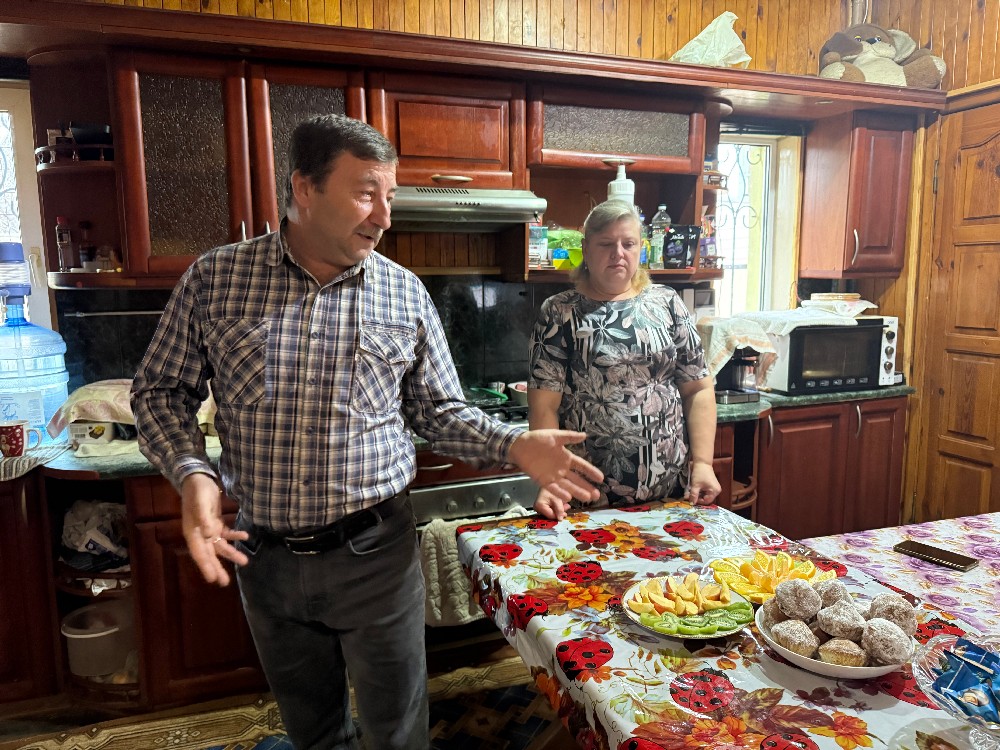
We talk in a house on the outskirts of Kharkiv, which the couple has been renting since the summer. Their eldest daughter is in Vinnytsia – she left Kostiantynivka a year ago. Their son is a student, studying to be a IT specialist in Kharkiv, and lives in a dormitory. “Now at least we have stable communication with our children, we see each other more often, we can talk calmly on the phone every day,” says Olena. "At home, we had to run around, wary of drones, looking for places where we could still get mobile coverage. Every time, it was a tearful conversation. The children begged: ‘Leave, we have no one but you...’"
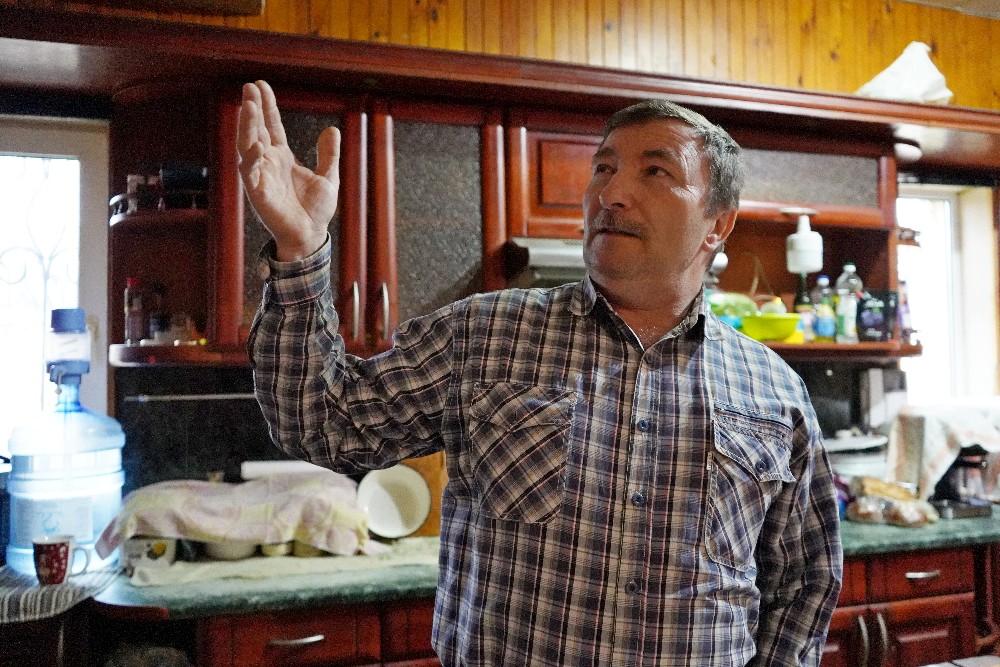
Valentyn Petrovych worked at the local bus company for over 20 years. When the company was completely destroyed after 2022, he went to work for the Kostyantynivka municipal gas company. Employees were taken to work by bus. One day, while waiting for transport at the bus stop, a russian drone flew nearby. There was an explosion. Shrapnel cut the man's legs... “After that, we were taken to work in an armored vehicle,” says Valentyn. “And so, after the workday, we would cram into that armored vehicle like sardines in a barrel and drive... But they didn't take us all the way home – we lived on the outskirts – so I had to walk. Drones often circled overhead...”
Tosha the dog listens attentively to his owners' story. He could also tell how difficult it was to live under constant shelling. If only he could talk... “He sensed every attack. He hid under the pillow, tears in his eyes. If a dog reacts like that, what can we say about people?” sighs Ms. Olena.
The woman had worked as a technical worker at the school her entire life. She loved her job. With the start of the war, when classes moved online, the school became a humanitarian center: people brought water here, which was unavailable in the city, and distributed food aid and clothing. And then an enemy rocket hit the school... Ms. Olena was wounded in the head by a window pane that had been torn out of its heavy frame...
Was it possible to evacuate earlier? Yes, but... "They talk about evacuation so well on TV: they came, they took us away... But you can only take a bag with your documents, and they'll take you to the bus at the station or to the car – where to next, no one knows... It's hopeless. And you can't take your dog or cat with you. How can you leave them alone in a city where everything is being destroyed?" wonders Mr. Valentin.
But after two strikes within five minutes on June 24th on the border with the neighboring garden, they realized that further delay would be disastrous. "There were no windows or doors left, the ceilings had fallen, and slate from the neighbor's house was flying straight into our bedroom. It was very scary," recalls Ms. Olena.
Their old «moskvitch», which was parked in the vineyard near the house, miraculously survived. They gathered the last few things that had remained intact, took the dog and three cats, and set off at their own risk. Luckily, it was a foggy morning, so the drones weren't flying... Their daughter helped them find a place to stay. “While the owner is abroad, we can live here,” explains our interlocutor. "What will happen next is unknown. But it's calmer here, even though there is frequent shelling. At home, when a drone flies overhead, you don't know if you'll make it to the next tree... Luckily, he found a job in Kharkiv at a trolleybus depot. But the salary is small – 15,000 hryvnia. After taxes, he takes home 13,000, and ten thousand goes to rent and utilities. You have to make do with what you have. My wife got a job at a small bakery as a baker. The salary is minimal, but at least it's something.
“But I enjoy going to work,” adds Ms. Olena. “The team is small and very friendly. They tell me that I fit in so well, it's as if I've been working with them my whole life. It's wonderful to be surrounded by sincere, caring people.”
However, social assistance is very difficult to obtain. It is available to internally displaced persons from the Kharkiv region, but for IDPs from the Donetsk region in Kharkiv, for some reason, it is not... No matter where the couple turned, they were refused everywhere. "Neither the Red Cross nor other humanitarian charities supported us, unfortunately... And we don't even have winter clothes. When we arrived home, debris had fallen directly into the closet and damaged everything. I had a nice winter jacket, but now it has a huge hole in it. That's why we didn't take many clothes with us when we left, because there was almost nothing left," says Mr. Valentуn.
When the couple found out that they had been accepted into the Ukrainian-Polish project “Family to Family”, they admit that they were moved to tears. Because when you constantly hear refusals, and then suddenly the opposite happens... “These funds were a lifesaver for us,” smiles Olena. “We were able to buy food and cover our utility bills. We save on everything anyway. We've already figured out which markets and stores in Kharkiv have cheaper products, so we go there. We are very grateful to Polish families for this support!”
“If it weren't for the war, we would also live well,” adds her husband. “And if someone found themselves in trouble, we would help without hesitation. But let's hope that no one ever has to go through that hardship. May every Polish family that shares their money, attention and warmth with Ukrainians have everything they need. We wish them as much joy, laughter, and a happy, peaceful sky as possible!”
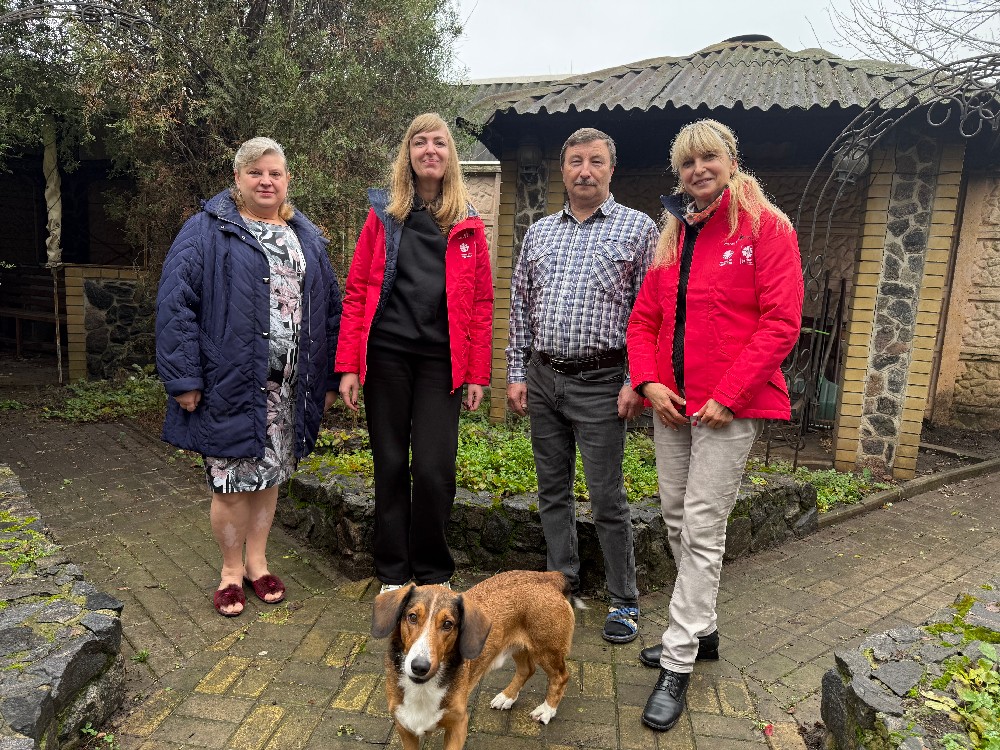
...We take a group photo to say goodbye. Tosha also happily poses next to us: he loves attention and company. “The dog misses home as much as we do,” sighs Ms. Olena. "It hurts my heart. But my parents' house burned down completely after the shelling, and ours... I don't even know if the foundation is still standing. But we would still return, even to the ruins. Because home is home. If only it weren't for this damn war..."
The “Family to Family” project is implemented by Caritas-Spes Ukraine with financial support from Caritas Poland in the Kharkiv-Zaporizhia Diocese and the Lviv Archdiocese. The project provides assistance to Ukrainians who find themselves in difficult circumstances as a result of the war: it offers cash support and grants to help them develop their own businesses.
війни: має напрямок кеш-підтримки та грантової допомоги на розвиток власної справи.