«I dream of returning home and bringing my embroidered shirts to my native Luhansk region»
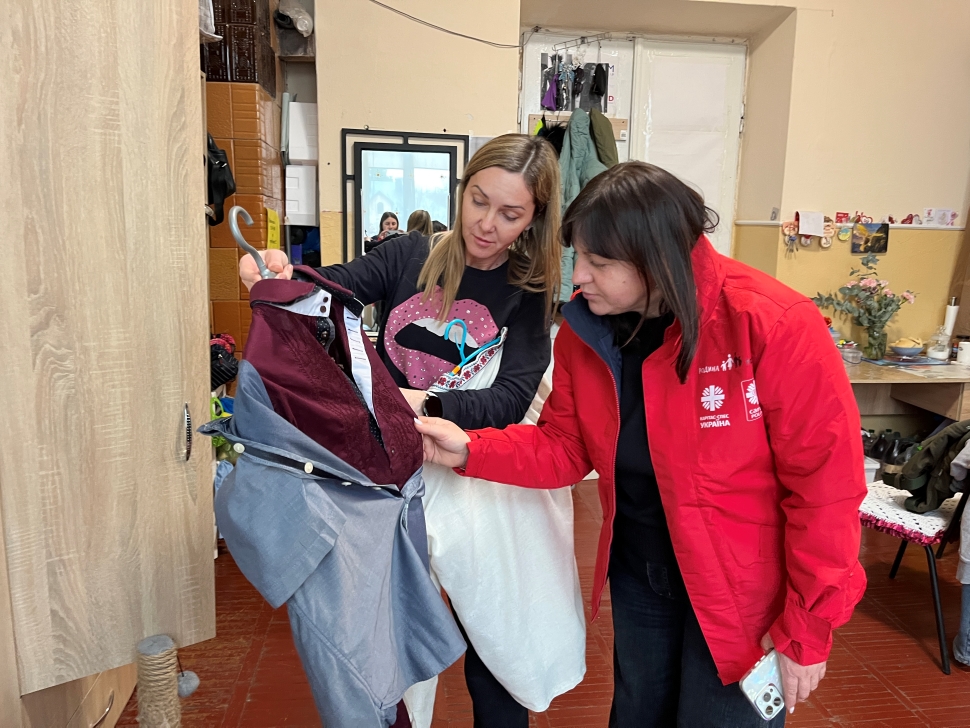
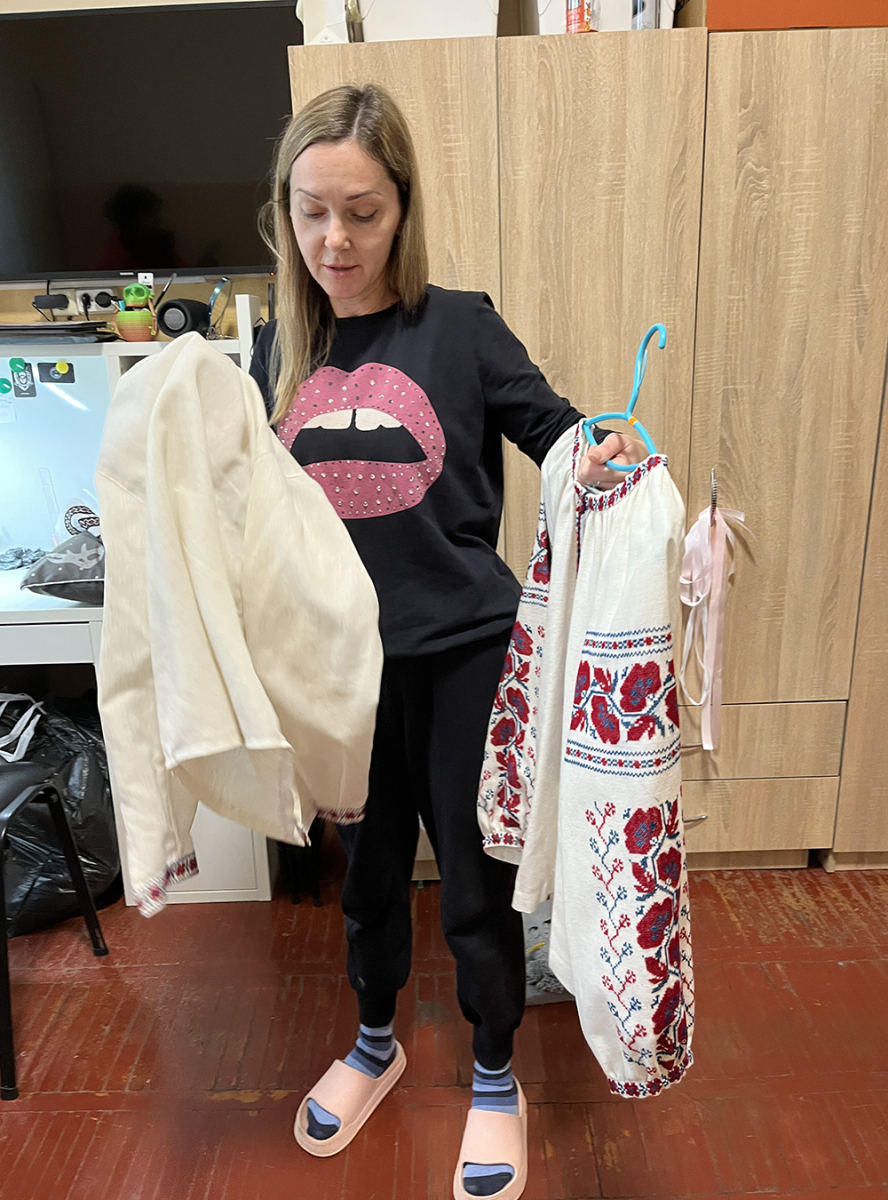
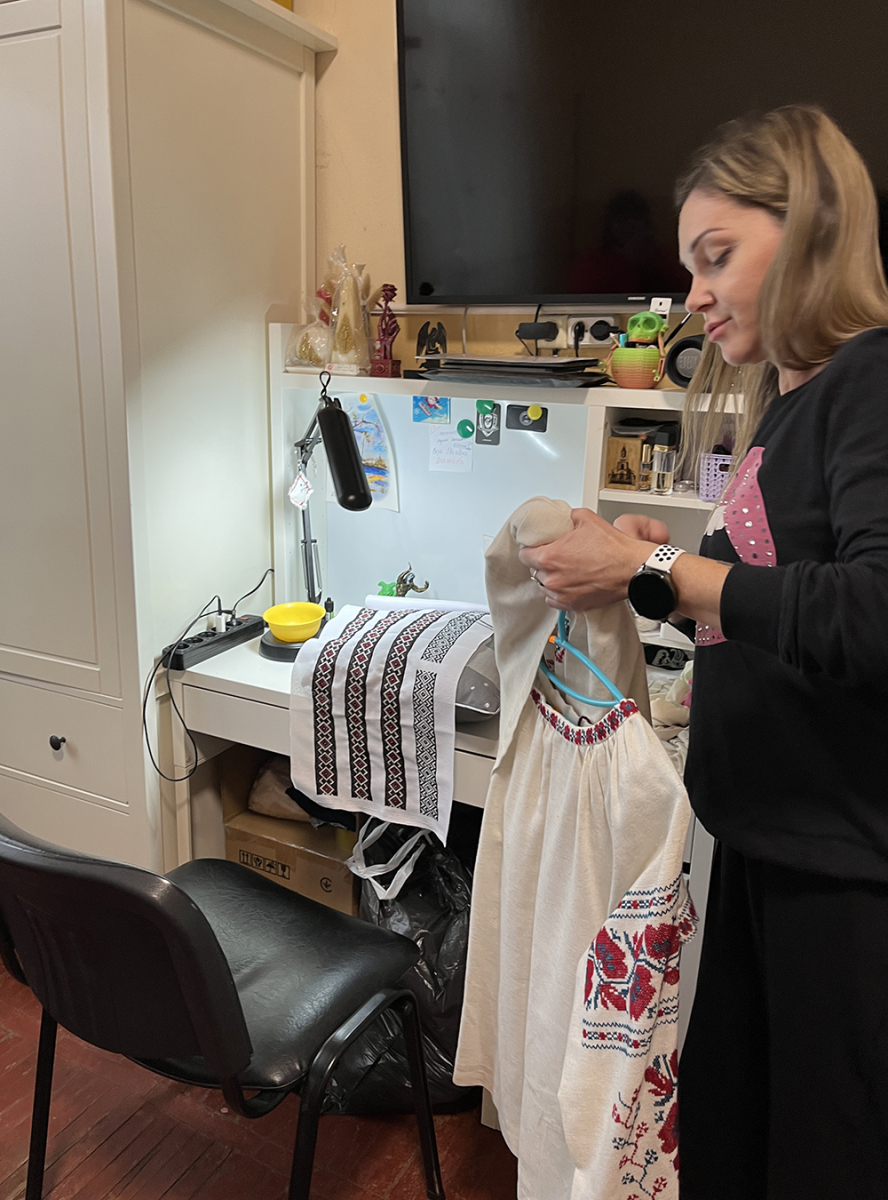
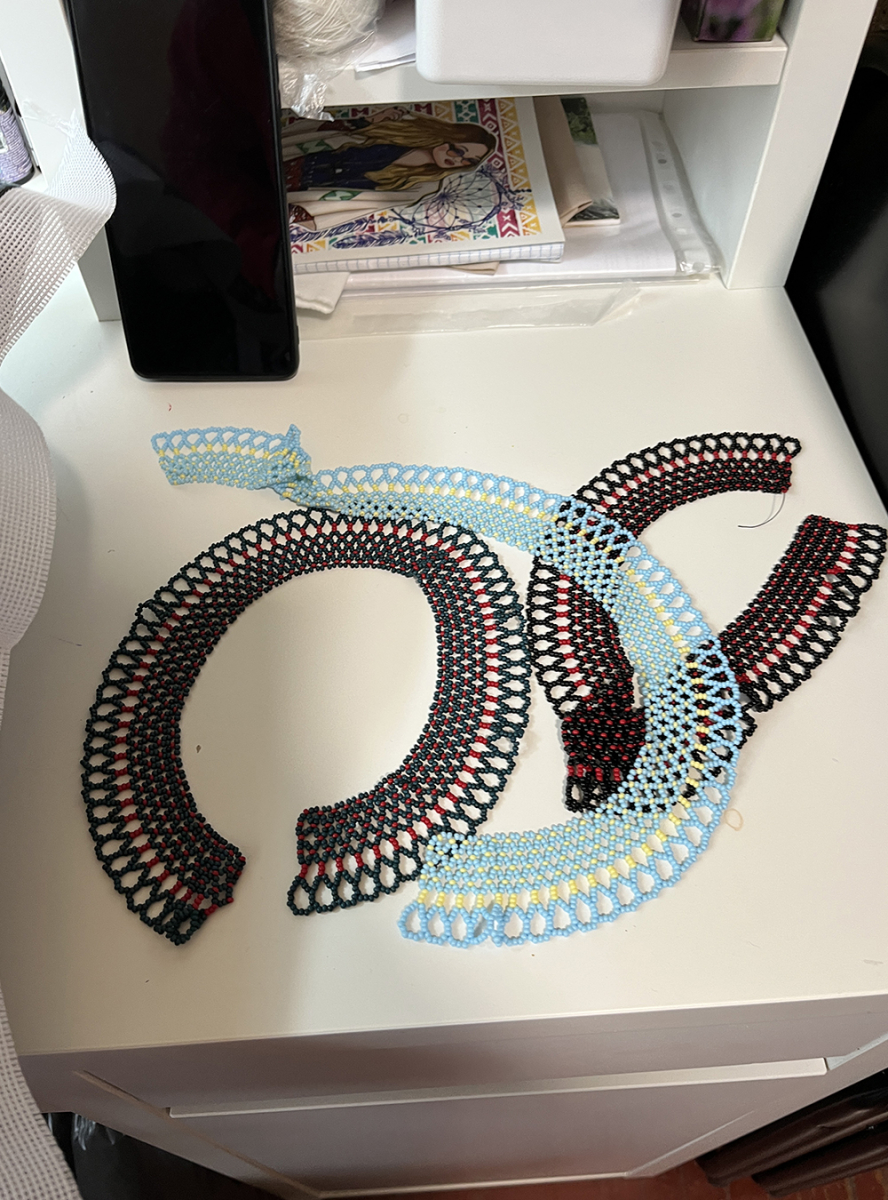
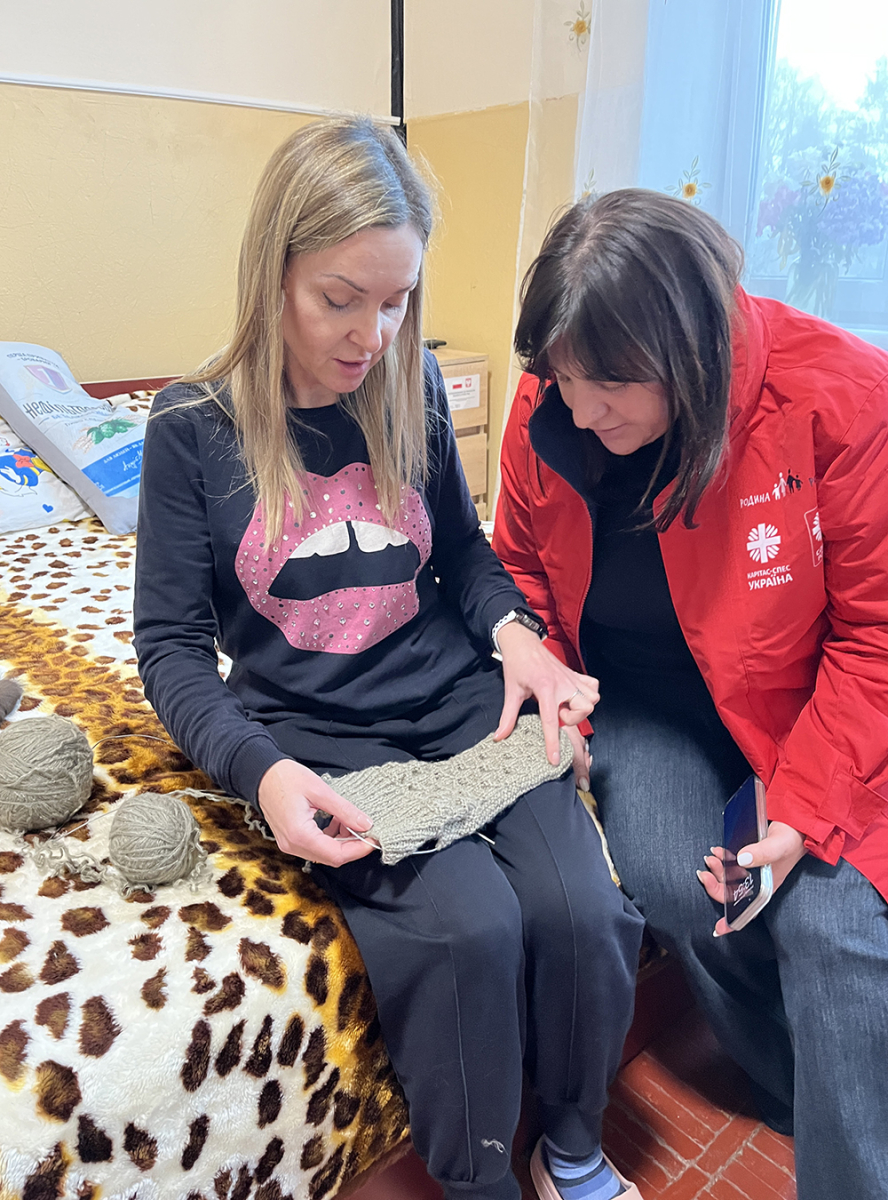
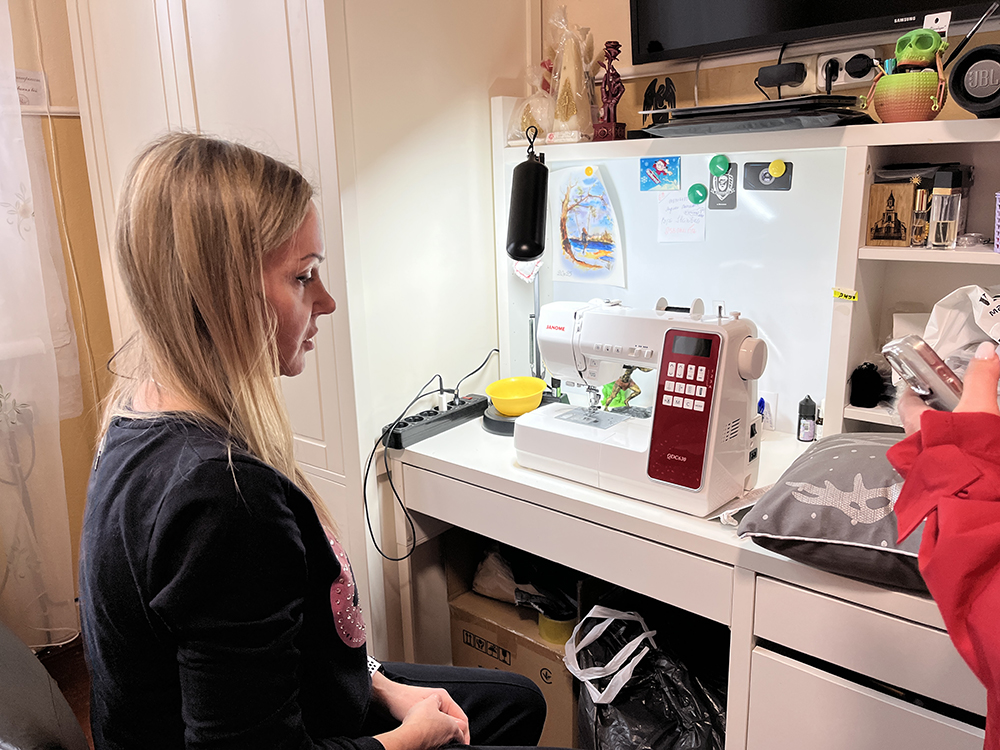
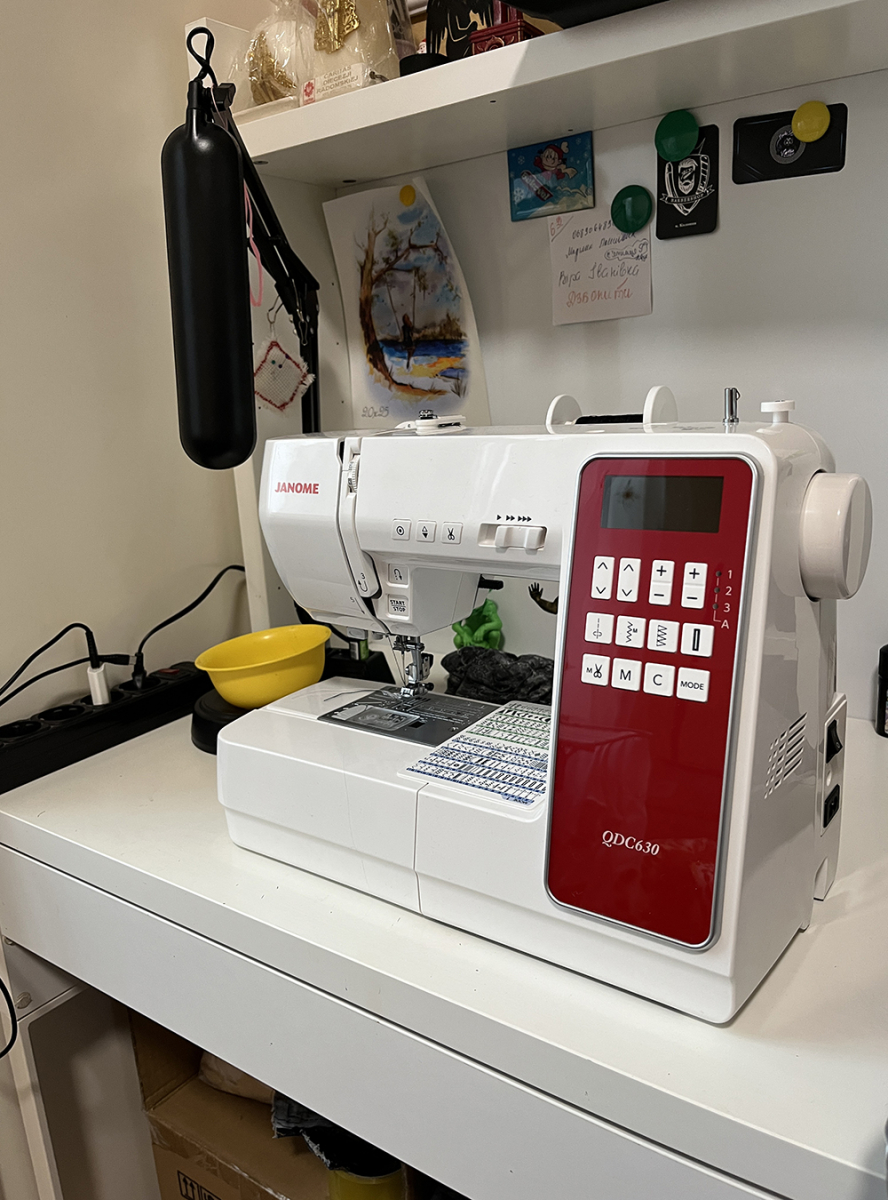
As part of grant support for business development provided by the Ukrainian-Polish project «Family to family» Natalia from Kolomyia purchased a sewing machine. This helps her bring her ideas to life and create. She creates amazing things: she sews, embroiders, knits, and makes beaded jewelry. This passion has become not just a hobby, but her life’s work.
Natalia came to Kolomyia in Ivano-Frankivsk region from Rubizhne in Luhansk region. From a city that, she says with a sigh, is now 80 percent gone. She arrived with her daughter in March 2022. «I don’t know how we got here… I was in a state of shock. Three days on the road – nothing but tears. I cried almost nonstop. We were driving to nowhere. We stopped in Kolomyia; my brother lived in this area – he had settled here long before the war. My daughter is 21 now, but she wasn’t even 18 when we left. She had big plans; she wanted to celebrate her 18th birthday at home with her friends. The war turned everything upside down. It took our home away and destroyed our joy».
We’re talking at a shelter for IDP families in Kolomyia, where Natalia and her daughter have been living for five years. They hadn’t planned to leave, to abandon their home in Luhansk region. But the war and the occupation of their hometown left them no choice…
When gunfire broke out on the streets of Rubizhne on the morning of February 24, 2022, and she noticed some strange movement of military vehicles, Natalia told herself: we’ve been through this before in 2014. She thought things would calm down quickly. She didn’t believe that a major disaster was looming. But she ran to work and felt the city ceasing to exist right before her eyes. «There were no people on the streets; everyone was hiding somewhere, and stores were closing», our interviewee recalls. «And I was a social worker, caring for 15 elderly women. They’d ask me to buy food, but I’d go out and not know what to do because the stores were empty. It was scary. At first, we stayed at home. We lived on the 7th floor of a nine-story building, and the explosions shook the building so much that it felt like it was about to collapse. We started going down to the basement, even though it wasn’t equipped as a shelter. During the shelling, I had the feeling that those walls were about to collapse on top of us. On March 9, the city lost power, gas, and water. It was freezing outside, and there was snow on the ground. No one knew the real situation in the city. My brother called from the Carpathian region. «Natalia, he said, «a military friend of mine’s phone broke. Come to my home, take my old phone, and bring it to him». I did just that. And when we met, the man asked, «Do you have a way to get out of here?» «Well… we’re not planning to», I said. And then I heard the phrase that proved decisive: «Get out of here! Go to a safer place. Because something terrible is about to happen». I went back home, and some friends were getting ready to leave and offered to take us with them. We had 10 minutes to pack.
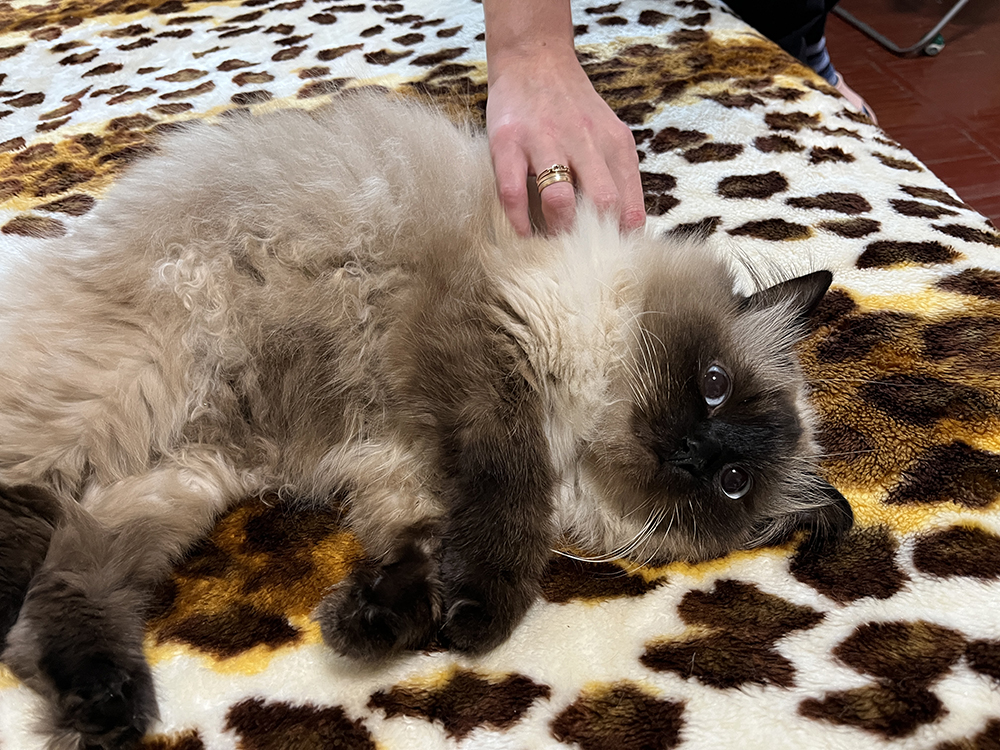
How do you pack quickly? What do you take with you from your old life? We took some white sheets and wrote «Kids» on them. My daughter begged us to take the cat. So we packed everything for the cat: his toys, food, and bowls. (Smiles). My daughter took the bare minimum of her belongings, but everything she needed. And I – nothing… I was afraid they’d stop us on the road and shoot us. Or turn us back. So I put on the clothes I’d worn to the basement. And that’s how I arrived in Kolomyia, with absolutely nothing: from a comb to toothpaste. Half an hour after we left the city, the russians fired on a checkpoint. And they fired on all the cars passing through there at that moment as well. When I found out about this, panic overwhelmed me. My parents were left behind in Rubizhne. We had no contact with them; they didn’t know we were fleeing. That’s why I cried the whole way. The only thing I remember from that trip across Ukraine: there were people standing by the road offering a place to stay, tea, coffee, cookies, sandwiches – all for free. I’d never seen anything like that in my life. I was incredibly moved».
Here in Kolomyia, Natalia also found a job as a social worker. She found work quickly, almost immediately after arriving, and this helped her get to know the unfamiliar city faster. «I was given the addresses of elderly women living alone whom I was supposed to care for – and that’s how I got to know Kolomyia: I walked around, looked for the right street, and memorized the layout. But I work part-time; I’d like to have another job, but finding work here is difficult. I didn’t know how to keep myself busy in my free time. I started knitting a little, sewing things by hand. And I dreamed of a sewing machine that would make the process easier for me. That’s how the idea of starting my own business was born».
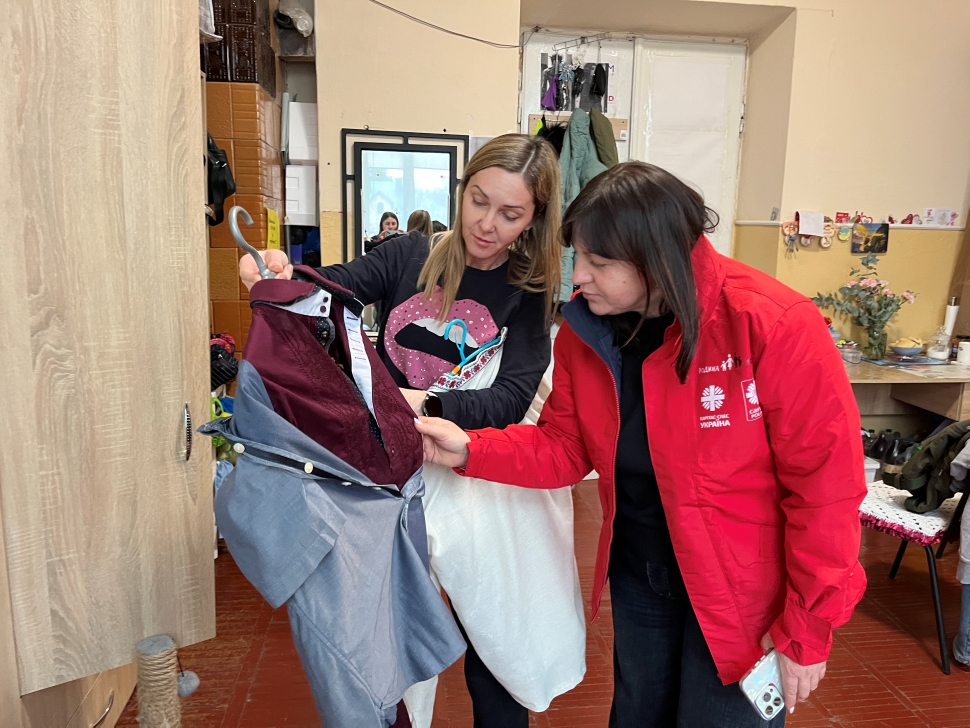
Back home, she used to sew things for her family from time to time. She had an old sewing machine. In Kolomyia, to her own surprise, she started embroidering. She embroidered the first shirts of her life – for herself, her husband, her daughter, and later for her brother and nephew. And when she learned about the «Family to Family» project and the opportunity to apply for a grant, she immediately decided: she would take advantage of this chance!
Now, thanks to the grant she received, Natalia has a modern, multifunctional sewing machine – lightweight and very easy to use. She quickly mastered it and is now planning to take classes to improve her sewing skills.
Her daughter has graduated from high school and is studying to become a veterinarian. She enjoys drawing, beadwork, and embroidering pillows. She volunteers. And together with her mother, she wants to learn how to sew tactical underwear to support the troops on the front lines. Natalia sells her embroidered shirts at the local market – Kolomyia is home to a famous folk crafts bazaar. She sells some items online, and others are bought by acquaintances. Life has slowly returned to normal. The greatest pain, Natalia shares, is the lack of regular contact with her mother. To get a cell signal, she has to drive outside Rubizhne and find the right spot. Once every two weeks, if she’s lucky, Natalia can hear her mother’s voice and ask about her life. «And dad didn’t wait for us… He passed away. Mom is on her own now. Life there is very difficult. And what will happen next… No one knows».
Natalia is sincerely grateful to the Polish families for supporting the project that helped her build a new life. «It’s good to know that there are caring people who offer support in times of need. And Kolomyia has become a second home for us. To be honest, this is where I really learned to speak Ukrainian well. We have friends; there are many of us at the shelter – from different cities. We get along well. But my biggest dream is to return home after victory and de-occupation. I really want to go home, I really want to see my mom, I want to walk into my room… And my greatest wish is to bring my embroidered shirts to my hometown… Because we didn’t have anything like that in Luhansk region. Or maybe I just didn’t know about them. And I really want to bring these things home, tell my fellow townspeople about the tradition of embroidery, show them, teach them. And keep doing this. That’s how I see my life after the war. I hope our apartment survives. I hope to return. That hope is what keeps me going».
The «Family to Family» project, implemented by Caritas-Spes Ukraine with financial support from Caritas Poland in the Kharkiv-Zaporizhzhia Diocese and the Lviv Archdiocese, provides assistance to Ukrainians who find themselves in difficult circumstances as a result of the war. The project provides cash assistance and grants to help people start their own businesses.