“Gifts of the Earth” that bring joy and hope
A story about how grant support from the “Family to Family” project laid the groundwork for new plans and the realization of a dream
«… And then we realized that our world is here. And we returned»
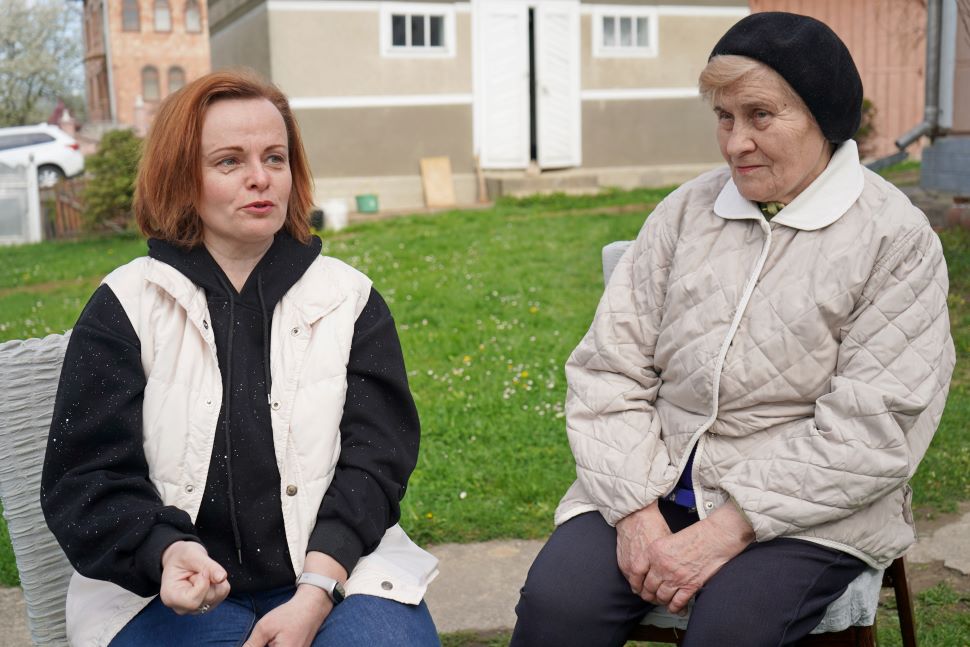
Spring in Bukovyna is capricious this year. It’s in no hurry to bring warmth. The earth seems to have frozen in anticipation. What will the future harvest be like without sun, sufficient moisture, and fair weather? “And this is one of those times when there’s little I can do. Because only the weather decides: when and how the seeds will sprout, how the seedlings will grow? How long will the temperature stay above freezing, and what does the atmosphere have in store for us tomorrow? Still, we’re hoping for good news from nature and counting on its favor. By profession, I’m a marketer. I’m used to clearly planning my next steps. “But here I have to take into account circumstances I can’t influence,” says Olena Kyrychenko from the village of Buda in the Chernivtsi region.
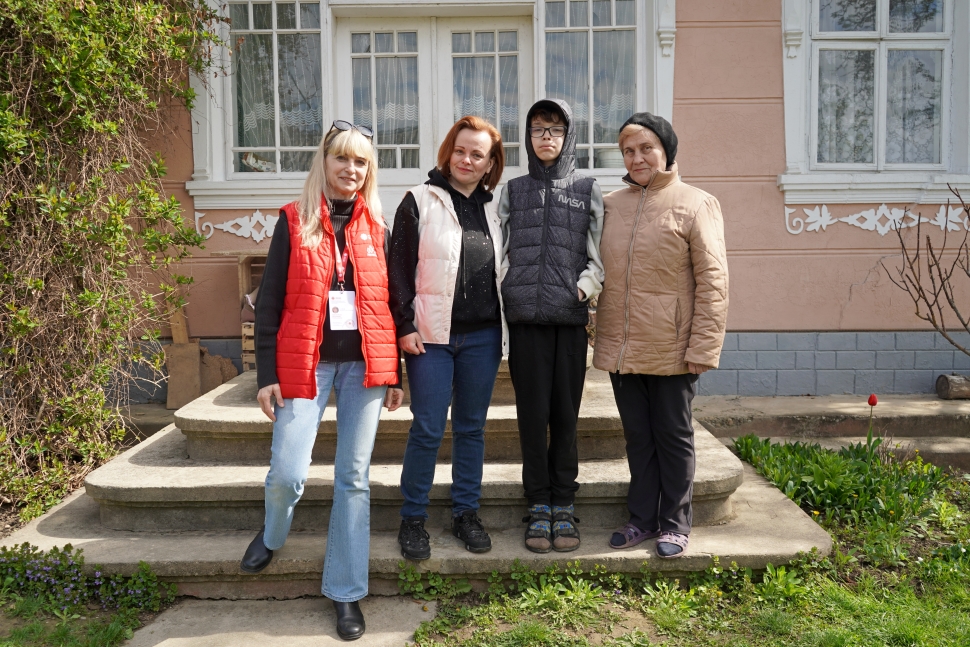
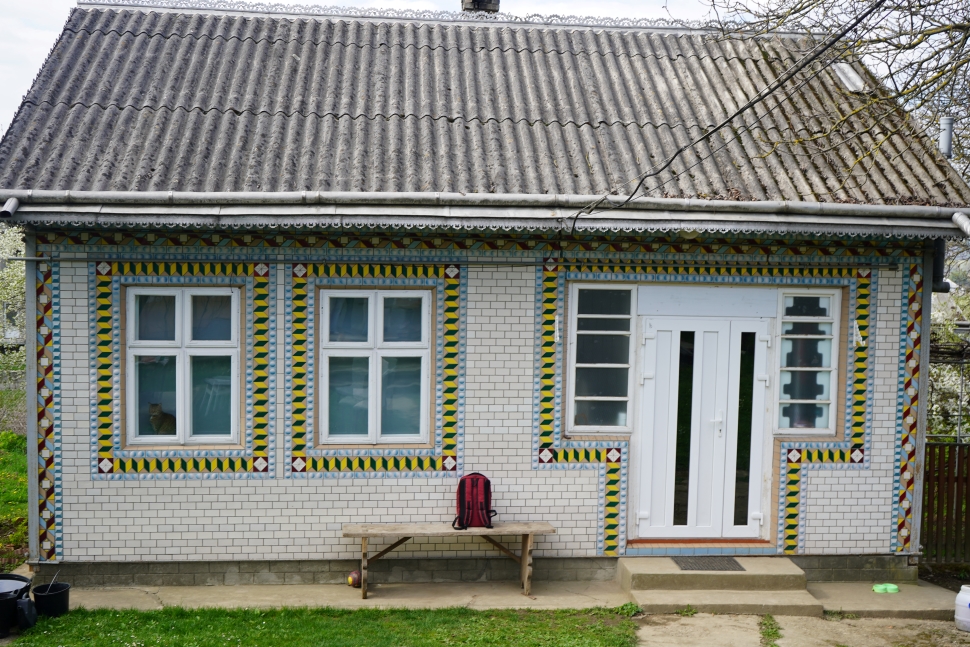
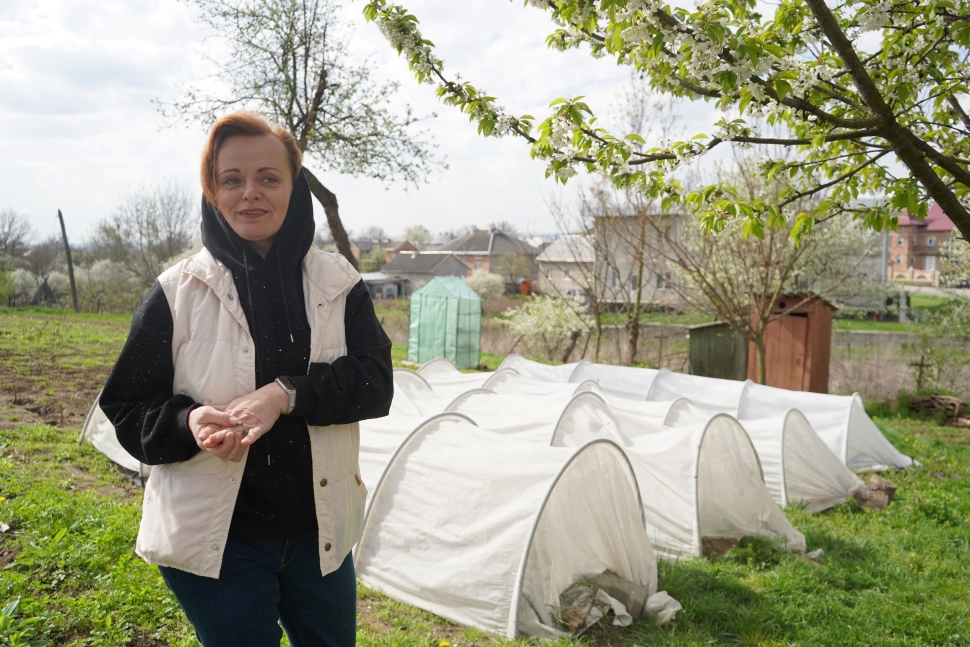
The farmstead with two neat little cottages, where we’re talking, is right by the road. Trees are blooming profusely in the garden, and the cozy yard is green with a bright carpet of grass. A ginger cat strolls around the yard with a sense of ownership. “He belongs to a neighbor, but he feels right at home here,” Ms. Olena smiles. And the second cat – the favorite of 15-year-old Artem, Ms. Olena’s son – peeks out at us curiously from the cottage window. Ms. Olena and her son have been living in Buda since 2022. A year ago, Ms. Valentina—their mother and grandmother – moved in with them. They are a family from Kyiv whose lives were radically changed by the war...
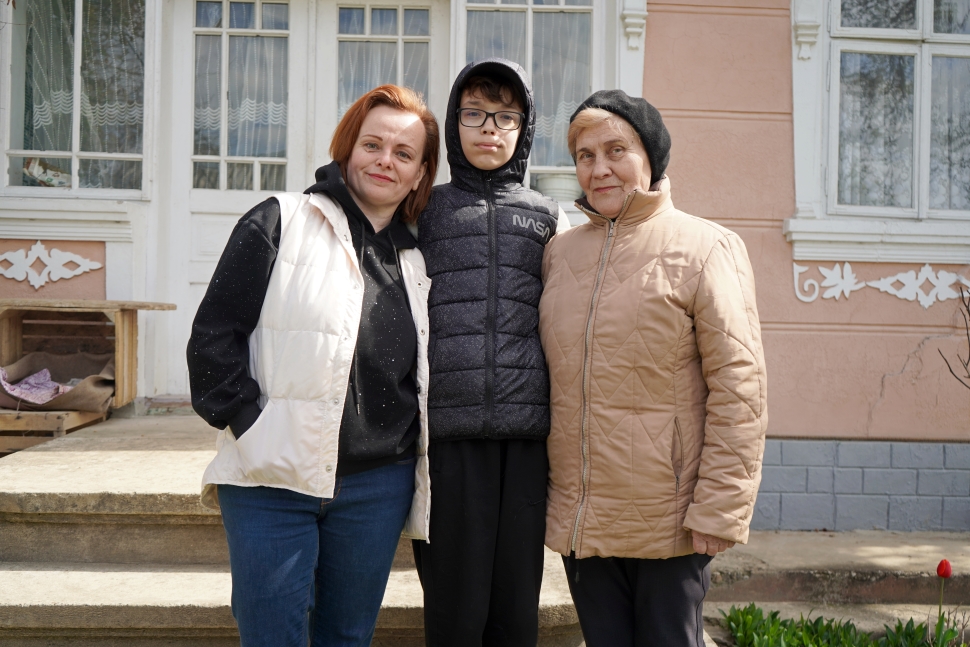
Olena runs her own agency that develops websites and chatbots. She works online. “My parents are from the countryside, but I was born and have lived my whole life in Kyiv,” she says. “Although when I was younger, I remember telling my mom and dad that I wanted to live in the countryside. But they’d reply, ‘We worked so hard, we sacrificed our youth so you could live in the capital.’ So it didn’t work out with the village back then. And now, as you can see, here we are… By force of circumstance. Life is unpredictable.”
On February 24, 2022, they left Kyiv for a nearby village. It seemed like it would be safer there. But the very next day, the bridges were blown up. There was no way back. It took them a whole day to drive the five kilometers to the neighboring village where Artem’s godmother lives – under constant shelling. They waited there for a while, but soon a “Grad” rocket struck that village too. So they decided to head west. Their second attempt at evacuation took the family to Khmelnytskyi. And soon after – to Chernivtsi. “I have fond memories of this city; we spent our honeymoon here… I’d never even heard of a place called Buda before. ‘There’s this beautiful village – Magala,’ my client said once. I just remembered that word. And when they asked on the hotline for displaced people where exactly we wanted to go, I answered without thinking: Magala. And it’s part of the same community as Buda. “That’s how we ended up here,” shares Ms. Olena.
At first, we rented a place. After the de-occupation of the Kyiv region, we went home. But we only lived in Kyiv for two months. “Suddenly I realized: the city isn’t mine anymore. Our world is in picturesque Bukovina. And we returned to Buda”.
Ms. Olena sold her apartment in Kyiv, and the search for a home in the village took a long time. “My mom, who also decided to move in with us, wanted the house to have all the utilities. And here we have gas and water. But at the same time – forty acres of land… What am I going to do with them? I hesitated for a year. But now I’m glad we took the plunge and became the owners of this estate.”
Buda and Magala are Romanian settlements. Local residents later asked Ms. Olena: “How,” they said, “did you dare?” “We didn’t even think about it,” she continues. “My son goes to the local school; it’s Romanian-speaking. He’s in 9th grade now, and he started when he was in 7th grade. He gets an A in Romanian language and literature. He speaks the language fluently. I understand a lot of Romanian, but speaking is still difficult for me. But that’s not a problem. We socialize with the locals. And you know what’s interesting? It seems to me that we didn’t have a social circle like this one back in Kyiv. In a big city, people live in their apartments, isolated from one another, and don’t always know their neighbors’ names. Sometimes it takes five years to find out that someone has died or moved away. But here we’ve really integrated into the community; for two years I was the chair of the IDP council in the community. And since my son attends the local school, we’ve gotten to know both the parents of Artem’s classmates and the teachers. We’re surprising everyone here with our experiments».
The idea grew from something simple
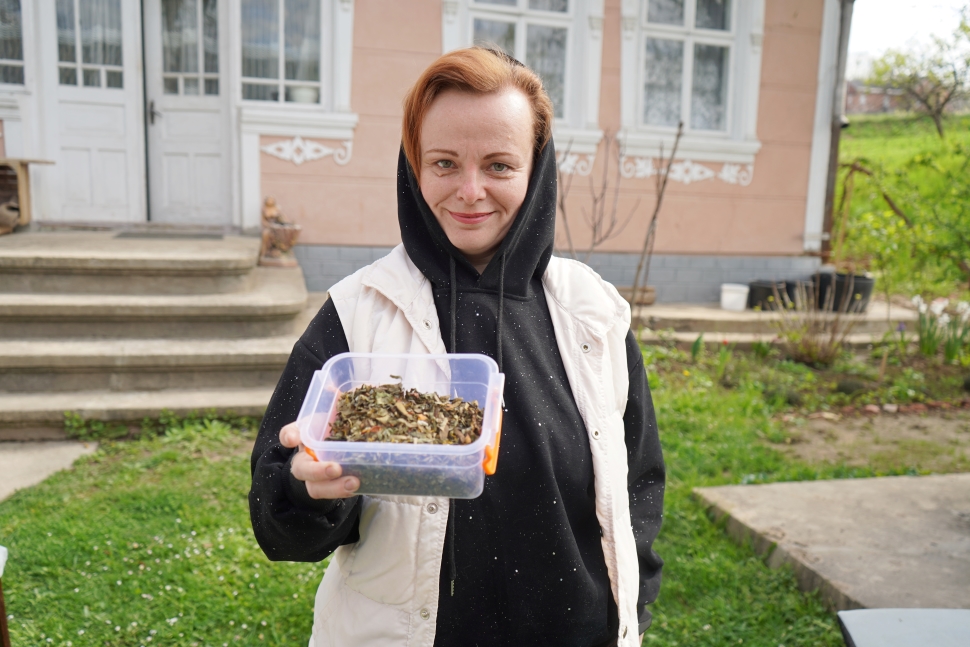
It all started with a YouTube video. Ms. Olena’s mother, Ms. Valentina, saw that you could make fermented tea from fruit tree leaves. Last June, they gave it a try. Just for themselves. Because they simply love drinking tea. And it’s interesting that the leaves, which seemed ordinary, suddenly revealed themselves in a new light. Because even if the plant didn’t bear fruit – it could still offer flavor. The process was captivating; they made a lot of tea. They gave it away – to friends and acquaintances. Positive feedback wasn’t long in coming. And with them came orders for delicious teas for the new season. And it became clear that tea is more than just a hobby.
“As a marketer, I understood that this isn’t a quick business,” explains Olena, “the ‘come up with an idea and sell it right away’ approach doesn’t work here. Here, you have to wait. Gather the leaves. Dry them. Freeze them. Grind them. Yes – thanks to freezing the raw materials, production can continue even out of season. The key is to organize the process correctly. Then the leaves need to be ground and given time to ferment. Simply put, it’s similar to fermentation. Next, everything needs to be dried. The process is long, but the result is worth it!”
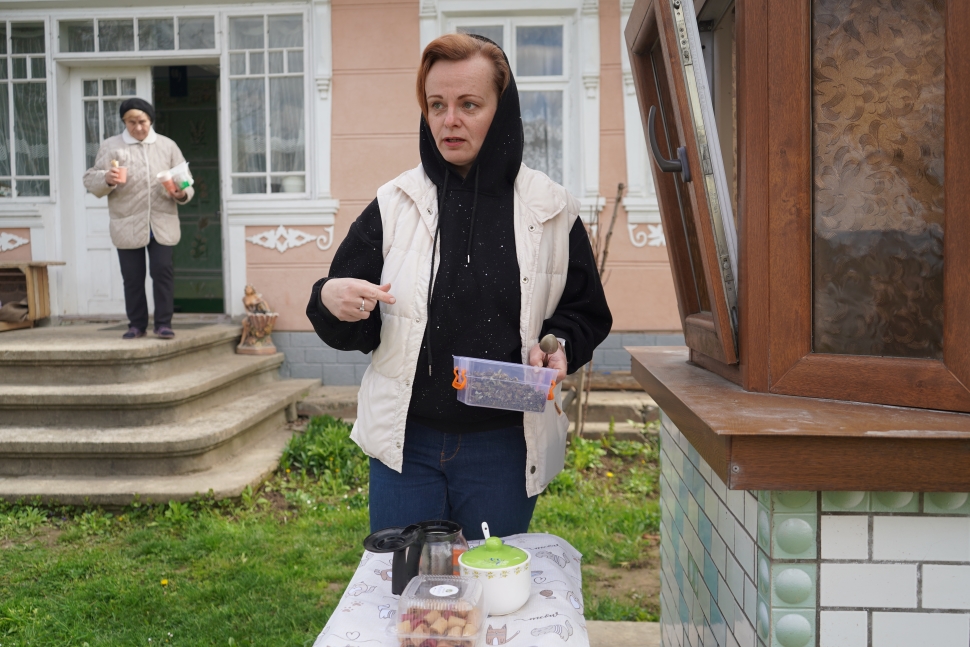
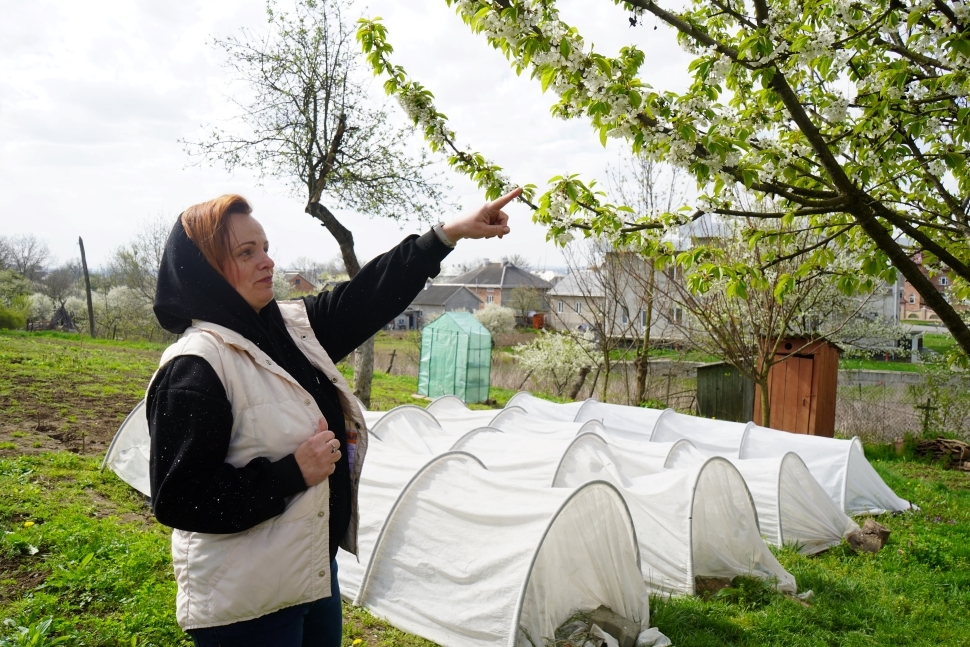
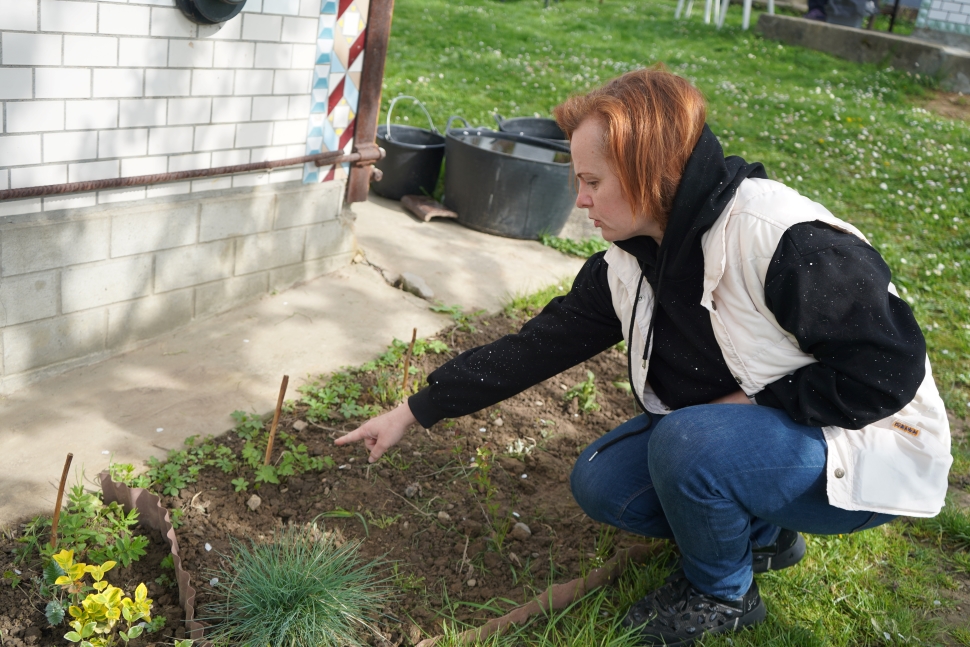
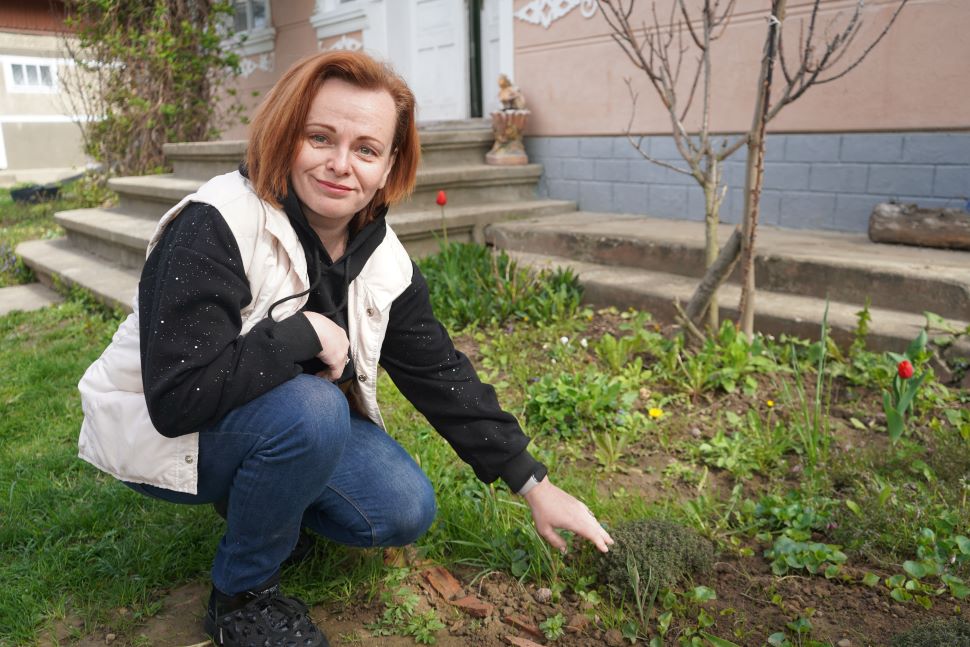
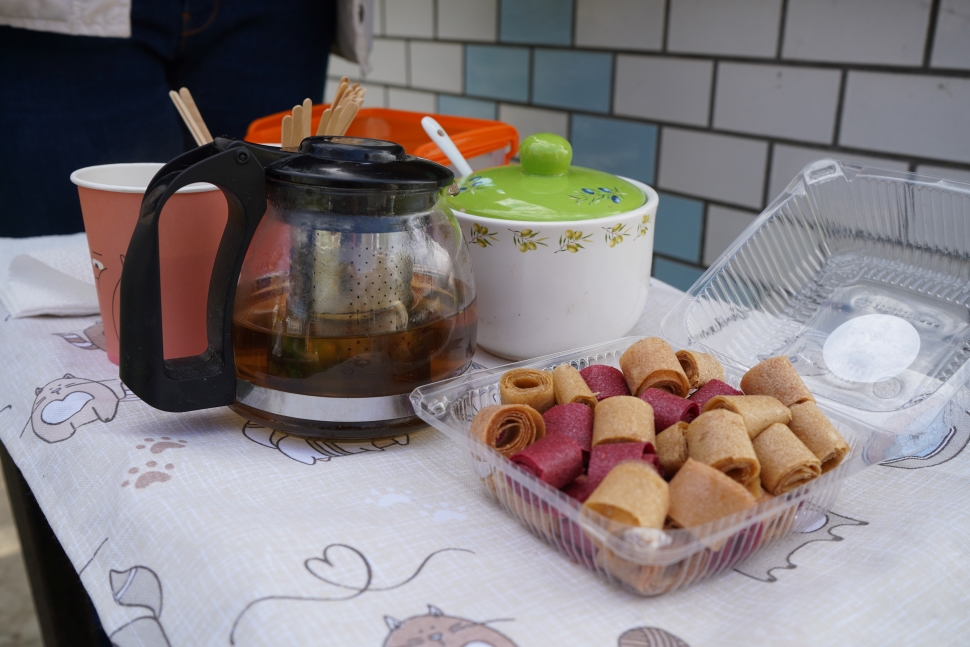
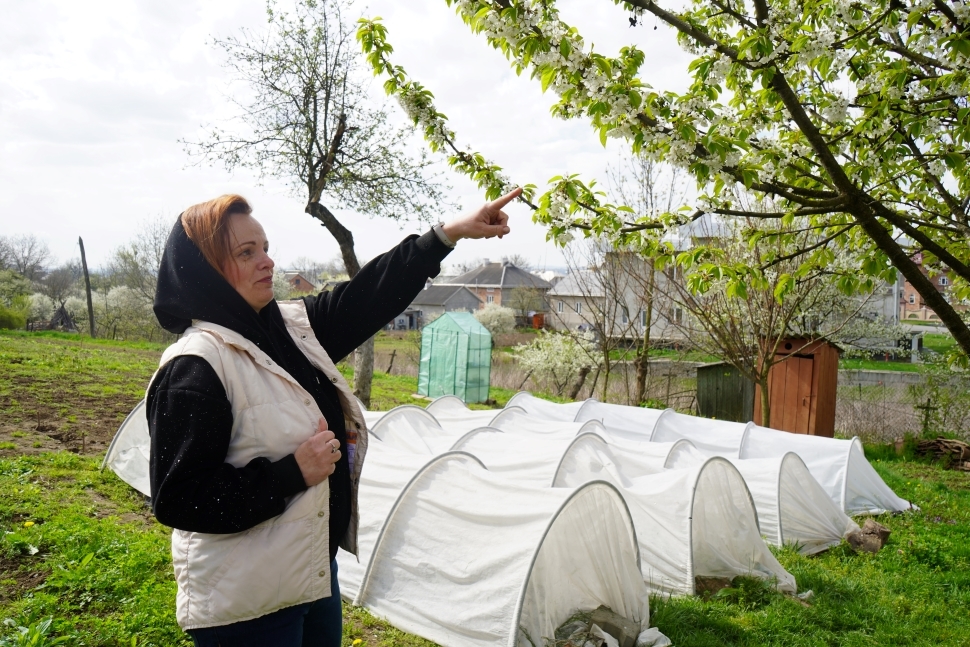
While Valentina brews their signature tea – left over from last season – in a teapot, Olena shows us around her property. Behind the house is a raspberry patch with a hundred bushes; there are also blackberries that bear fruit from June to October. They’ve planted strawberries in the greenhouses. The stems from the berries are also well-suited for making tea.
“When I heard about the possibility of grant support from the ‘Family to Family’ project to help her start her own business,” says Olena, “I didn’t hesitate for a moment. I wrote the grant application in two hours.” “I believed my daughter would succeed; I always support her,” adds Valentina, “because I know my daughter well. Her ideas are interesting and well-thought-out. She’s the leader of our family. We wouldn’t take a single step without her, but we support her. Once you’ve started something, you have to see it through to the end. People ask about it and look forward to our teas. And that’s really nice.”
New opportunities and valuable experience
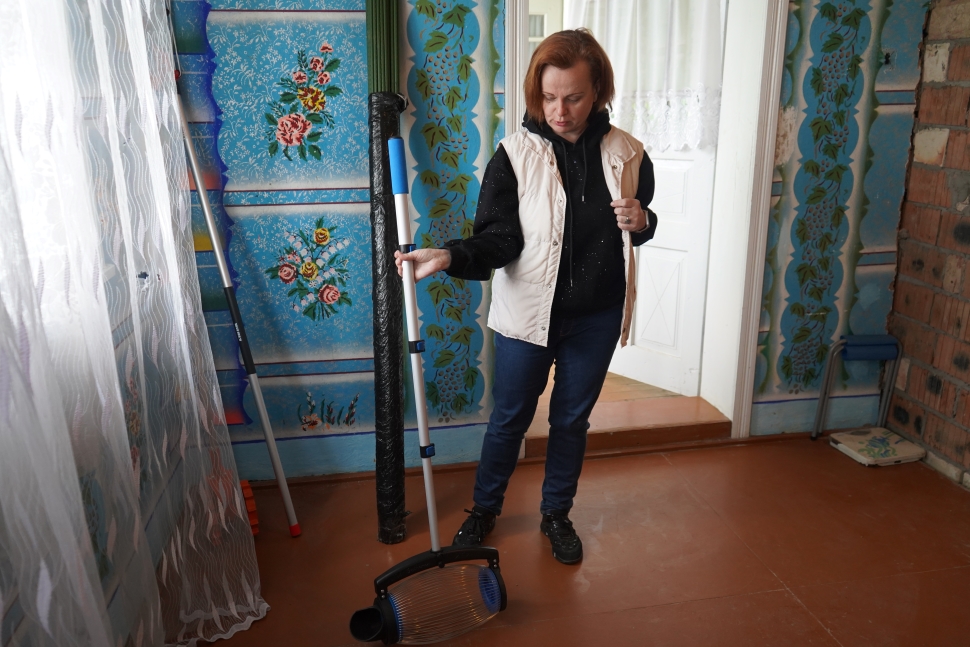
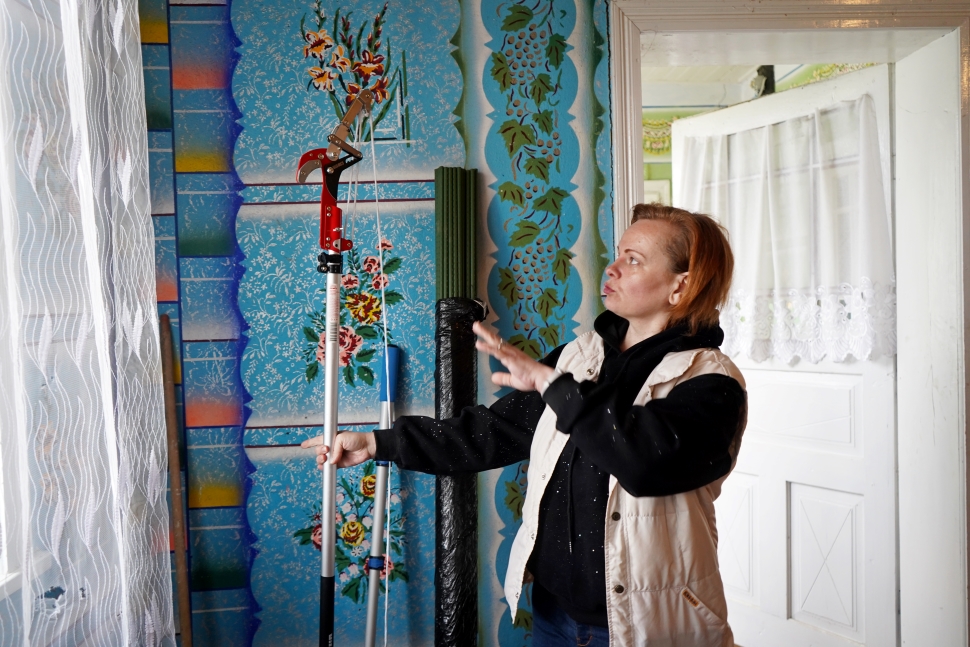
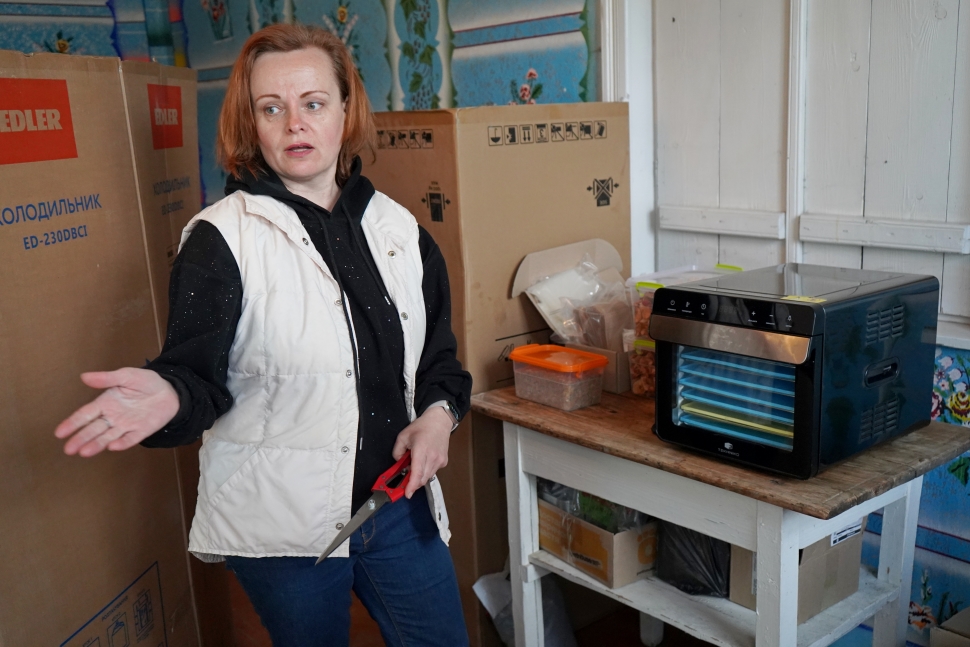
With the grant funds, the family purchased seeds of chamomile, echinacea, calendula, sage, and milk thistle. They haven’t planted them yet – they’re waiting for the soil to warm up. They also bought over 100 fireweed seedlings, organic plant protection products, and the necessary equipment and tools: a pruning saw, a cordless pruner and shears, a seeder, and stakes to form rows for the sprouting plants; We bought a dehydrator (dryer), a meat grinder for granulation, and trays for packaging the products. And a small greenhouse for seedlings.
“But, as often happens, one idea leads to another,” smiles Ms. Olena. “We bought a dehydrator to dry leaves for teas, and realized we could also make fruit pastilles. And put together gift sets: tea with pastilles. We see potential in this.”
As a sole proprietor, I’ve registered new business codes, and I’ll figure out how everything works, since I’m now dealing with food products. We have a space (a former barn) that we want to renovate into a warehouse for our products. At the moment, we have everything we need to move forward with this venture.
We named the brand “Gifts of the Earth.” “At first, we thought of something like ‘Fermenttea’ (because of the fermented tea), but then I shared it on my blog, and a customer suggested the idea. I thought: how fitting. Gifts of the Earth – that’s exactly it! After all, we have nuts, we dry apples, and we make fruit leather from berries and fruits. All of this is a gift from the earth”.
The support from the “Family to Family” project has been a huge help to us. Living in a village is expensive – there’s always something we need to buy. It would have taken us years to purchase all the equipment and tools we need for our work. But the project’s assistance really sped up the process. It’s been a real boost for us – an interesting experience and a great responsibility. We’re so grateful to you for this opportunity!
«Our son wants to carry on our business. We’ll support him»
Artem is passionate about IT and helps his mom develop websites. The family plans to sell “Gifts of the Earth” products through their own website. “And my son has completely taken over the production of chatbots; he really enjoys this work,” says Olena. “He’ll be 16 soon and wants to start his own sole proprietorship. After graduating from high school, he dreams of studying in Romania to get an education, but he wants to live in Ukraine. He’s a talented boy. And responsible. Loyal. When we were rushing out of the house on the first day of the full-scale invasion, Artem gathered all his stuffed animals. And he wouldn’t have agreed to leave them behind for anything. I barely took any personal belongings, but I couldn’t say no to my son because I knew – each of those toys means a lot to him. He was worried that the occupiers would come and destroy the toys dear to his heart. We really hope the war will end soon. My son sees himself in the future here, with us, on his native land. He already has the professional skills and personal qualities needed to successfully carry on the work. And we will certainly support him.
At first, when we only had one shovel, my son didn’t pay much attention to farming matters. But when all those gadgets we bought as part of the project started arriving, he became actively interested. He assembled and reinforced the greenhouse all by himself. As for the cordless pruning shears – we have a “battle” over them: who gets to use them first. He finds it interesting, and Artem’s friends are also involved in working the land. I think this is a very healthy environment for a child. Here he has friends he didn’t have in the city – between COVID and endless online classes. But in the village, my son has a completely different life. And here’s another interesting observation: Romanians really love children. And they treat them differently. In Kyiv, school was very stressful for us. But here, everything is somehow easy and natural. School celebrations are very beautiful. When there’s a concert or some other special event, both the Ukrainian national anthem and the Romanian national anthem are played at the same time. That deserves great respect. We’re impressed by how carefully Romanians treat their own traditions while also honoring the culture of another people.”
Finally, we ask Ms. Olena about her dreams and what makes her happy. “You know,” she smiles, “here in Buda, we live like we’re in paradise. You step outside – and the views take your breath away. You take a step – and there’s new, incredible beauty. That’s why every day is a gift. We find joy in simple things. Our greatest wish is for the war to end. For this tension to disappear – which, unfortunately, is only growing. You can’t be completely happy when you know what’s going on. When you hear this difficult news. But life doesn’t wait. So you go on and do your thing. And that’s what keeps you grounded.
And we dream of peace. And that what we’re doing is the right decision: both for us and for the people who will choose our gifts. We dream of peace. That our work will bring us stability and continue to bring joy to people. And that they will share the joyful moments of their lives with others. And that the products we can offer them will be connected to the happy moments of their lives. I would really like that.”
The “Family to Family” project, implemented by the Caritas-Spes Ukraine Regional Office with financial support from Caritas Polska in the Kharkiv-Zaporizhzhia Diocese and the Lviv Archdiocese, provides assistance to Ukrainians who find themselves in difficult circumstances as a result of the war. The project provides cash assistance and grants to help people start their own businesses.